

🔥 Black Friday Dehumidifier Deals 2026: picks worth watching →
If you are dealing with a damp, musty basement, you know how quickly excess humidity can lead to mold, mildew, and an unpleasant odor. Finding the right solution is crucial for comfort and home maintenance. This guide reviews the best energy star dehumidifier for basement spaces, covering models from Waykar, Hisense, Midea, and more. Whether you have a small crawl space or a large finished basement, we help you choose the perfect unit for your needs.



Buying Guide
Capacity and Coverage Area
Basement dehumidifiers are rated by how many pints of moisture they remove per day. For a standard basement up to 1,500 square feet, a 50-pint model often suffices. Larger spaces or very damp conditions may require 70 or even 150-pint units. Check the manufacturer’s coverage area to ensure the unit can handle your basement’s square footage. The best basement dehumidifier for you will match the humidity level and room size.
Energy Efficiency and Certification
An Energy Star certified dehumidifier uses less electricity than standard models, saving you money on utility bills. Look for the Energy Star label to ensure efficient performance. Units with smart sensors and auto modes further reduce energy waste by running only when needed. Our list focuses on energy star dehumidifiers for basement use, so you can run them for hours without worrying about high costs.
Drainage Options
Continuous drainage via a hose is ideal for basements, as you won’t need to empty a bucket daily. Many models include a gravity drain hose or a built-in pump for vertical drainage up to 16 feet. If your basement lacks a floor drain, a pump model allows you to route the hose to a sink or window. Check if the unit comes with a hose or if you need to purchase one separately. The top high capacity dehumidifiers often include flexible drainage for easy setup.
Noise Level and Portability
Basements are often used as living spaces, so a quiet dehumidifier is a plus. Look for models rated at 42-49 dB, which are comparable to a quiet conversation. Caster wheels and side handles make it easy to move the unit between rooms or to empty the tank. If you plan to use the dehumidifier in a bedroom or home office, prioritize quieter models. For more tips, see our guide on the best dehumidifier on the market.
Final Thoughts
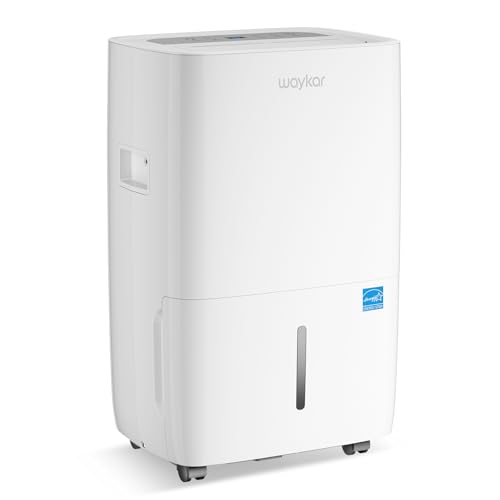
Choosing the best energy star dehumidifier for your basement depends on your specific needs: for large, open basements up to 5,000 square feet, the Waykar 80 Pints 5000 Sq. Ft 2025 Energy Star offers excellent coverage and smart humidity control; for those with a smaller space or who want a compact, quiet unit, the Midea 35 Pint Dehumidifier for Basement is a reliable and energy-efficient choice with smart features. Both models are Energy Star certified and provide dependable moisture removal for a healthier home.
Related Guides
- Best Buy Dehumidifier for Basement in 2026
- Consumer Report Best Basement Dehumidifier Picks for 2026
- AEOCKY 5500 Sq.Ft Energy Star Review
Frequently Asked Questions
How do I choose between a 50-pint and 70-pint dehumidifier for my basement?
Consider the size of your basement and the humidity level. A 50-pint unit is suitable for up to 4,500 square feet and moderate humidity. For larger spaces or very damp conditions, a 70-pint or higher model provides faster moisture removal. Check the manufacturer’s coverage area and your basement’s square footage to decide.
Can I use a dehumidifier in an unfinished basement?
Yes, dehumidifiers work well in unfinished basements. Look for models with continuous drainage and a built-in pump if you need to route water upward. Ensure the unit is placed on a level surface and has adequate airflow around it. For more advice, read our guide on the best peltier dehumidifier for basement.
What is the ideal humidity level for a basement?
Most experts recommend keeping basement humidity between 45% and 55%. This range prevents mold growth and condensation while staying comfortable. Many dehumidifiers allow you to set a target humidity, and some models automatically maintain that level. Use a hygrometer to monitor humidity and adjust your dehumidifier settings accordingly.
How often do I need to clean the dehumidifier filter?
Check the filter every two weeks and clean it if it looks dirty. A clogged filter reduces airflow and efficiency. Most models have a washable filter that you can rinse with water and let dry. Some units feature a filter reminder light that alerts you when cleaning is needed. Regular maintenance extends the life of your dehumidifier.

