🔥 Black Friday Dehumidifier Deals 2026: picks worth watching →
You walk into your basement and that familiar musty smell hits you. Damp air clings to everything, and you know it is only a matter of time before mold starts creeping up the walls. You need a dehumidifier that can handle the job, but with so many options on the market, figuring out who makes the best basement dehumidifier can feel overwhelming. This guide breaks down the top contenders for 2026, focusing on capacity, energy efficiency, and smart features that actually matter in a basement environment. Whether you are dealing with a small crawl space or a large finished basement, we have you covered.
If you are also exploring other solutions for moisture control, check out our roundup of the best portable dehumidifiers for basements for additional insights.


Buying Guide
Capacity and Coverage Area
The first thing to consider is how much moisture your basement produces and the size of the space. Dehumidifiers are rated by pints per day, with larger capacities handling bigger areas. For a typical basement up to 2,000 square feet, a 34-pint model often suffices. For larger basements or those with serious humidity issues, look for units in the 70 to 80 pint range, which can cover up to 5,500 square feet. Choosing the right capacity ensures the unit runs efficiently without overworking.
Energy Efficiency and Certification
Running a dehumidifier 24/7 can add up on your electricity bill. That is why Energy Star certification matters. Units like the best high-capacity dehumidifiers for home use often carry this label, indicating they use less energy while still delivering strong performance. Some models even achieve the Energy Star Most Efficient designation, which can save you hundreds annually. Always check for certification to balance dehumidification power with operating costs.
Drainage Options
Basements rarely have floor drains conveniently placed, so drainage flexibility is key. Most units offer a removable water tank that you empty manually, but continuous drainage via a hose is far more convenient for long-term use. Some dehumidifiers include a built-in pump that can push water up to 15 feet vertically, ideal for routing water to a sink or window. Gravity drainage works if you can place the unit above a drain, but a pump gives you more placement freedom.
Noise Level
If your basement doubles as a living space, home office, or guest room, noise becomes a real concern. Many modern dehumidifiers operate around 40 to 42 decibels, which is comparable to a quiet library. Look for models with a sleep mode or low fan speed that further reduces sound. Quieter operation allows you to enjoy the space without constant humming, making the unit more pleasant for daily use.
Final Thoughts
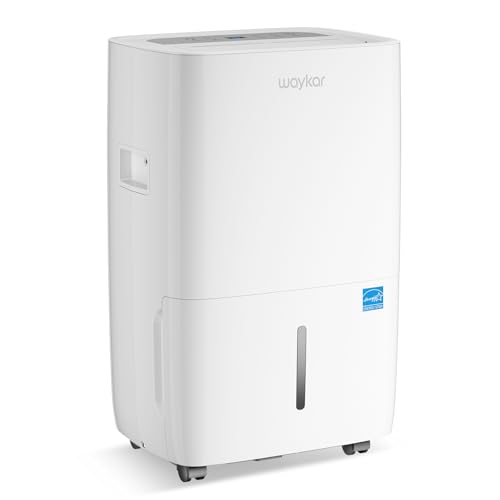
After reviewing the top models, we believe the Waykar 80 Pints 5000 Sq. Ft 2025 Energy Star stands out for large basements needing powerful moisture removal with smart controls, while the avylo Dehumidifier for Basement with Pump is ideal if you require a built-in pump for flexible drainage and whisper-quiet operation. Both offer excellent energy efficiency and reliable performance for different needs.
Related Guides
- Best Buy Dehumidifier for Basement in 2026
- Consumer Report Best Basement Dehumidifier Picks for 2026
- AEOCKY 5500 Sq.Ft Energy Star Review
Frequently Asked Questions
What size dehumidifier do I need for my basement?
For basements up to 2,000 square feet, a 34-pint model is usually sufficient. For larger spaces or high humidity, consider a 70 to 80 pint unit that can cover up to 5,500 square feet. Measure your basement and note moisture levels to choose the right capacity.
How often do I need to empty the water tank?
It depends on the tank size and humidity level. A 1.85-gallon tank may last up to 15 hours in moderate humidity, but in very damp conditions you may need to empty it more frequently. Using continuous drainage via a hose eliminates this chore entirely.
Are Energy Star dehumidifiers worth the extra cost?
Yes, Energy Star certified models use up to 30% less energy than standard units, which can save you hundreds over the life of the product. They also tend to have better build quality and features, making them a smart long-term investment for your home.
Can a dehumidifier help with mold and mildew?
Absolutely. By maintaining relative humidity between 30% and 50%, a dehumidifier creates an environment where mold and mildew cannot thrive. It is one of the most effective tools for preventing moisture-related issues in basements. For more on this, read our guide on the best dehumidifiers on the market for 2026.