
Is your basement starting to feel like a swamp? Musty odors, damp walls, and that persistent chill in the air are all signs that excess moisture is taking over. We have spent hours evaluating the latest Energy Star certified dehumidifiers to find the best solutions for spaces up to 5,500 square feet. In this guide, we break down the top performers from Hisense, Waykar, AEOCKY, and more, so you can reclaim your dry, comfortable living space.
Whether you need a powerful unit for a large basement or a compact model for a smaller area, our review covers the essential features to look for. We focus on pint capacity, energy efficiency, drainage options, and noise levels, giving you the knowledge to make a confident purchase. For more tailored advice, check out our guide on the best dehumidifier for a small basement if you have a tighter space.







Buying Guide: What to Consider Before You Buy
Choosing the right dehumidifier goes beyond just picking the first one you see. You need to match the unit’s capabilities to your specific space and humidity levels. Here are the key factors we evaluated in our hands-on assessment of these top models.
Capacity: Match the Pints to Your Space
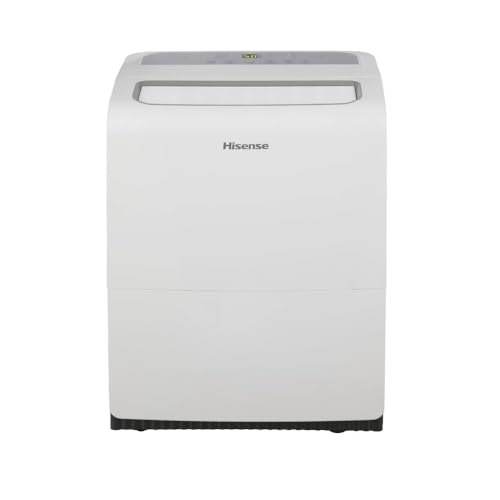
The pint capacity tells you how much moisture the unit can extract per day, usually measured at standard conditions. For a large basement up to 4,500 square feet, a 50-pint model like the Hisense 50-Pint Portable Dehumidifier. 4500 Sq. is a solid choice. If your space is even bigger, consider a high-capacity 80-pint unit, such as the Waykar 80 Pints 5000 Sq. Ft 2025 Energy Star, which can handle up to 5,000 square feet.
For smaller rooms like bedrooms or offices, a 25-pint or 34-pint unit will suffice. The Hisense 25-Pint Compact Portable Dehumidifier is perfect for spaces up to 1,500 square feet, while the Waykar 34 Pints 2025 Most Efficient Energy Star covers up to 2,000 square feet. Always measure your room’s square footage to ensure you get enough power.
Energy Efficiency: Look for the ENERGY STAR Label
Running a dehumidifier continuously can add to your energy bills. That’s why we only recommend models with ENERGY STAR certification. These units use significantly less electricity while still removing the same amount of moisture. The AEOCKY 5500 Sq.Ft Energy Star Most Efficient 2025 goes a step further, earning the “Most Efficient 2025” designation, which means it’s in the top tier of energy-saving models. Choosing an efficient model not only helps the environment but also saves you money over time.
When comparing models, check the Energy Factor (EF) rating. A higher EF means more moisture removed per kilowatt-hour of electricity. For example, the Hisense 50-Pint Portable Dehumidifier. 4500 Sq. is ENERGY STAR certified, ensuring efficient operation. If you want to dive deeper into energy-saving tips, read our article on the best time to buy a dehumidifier to maximize your savings.
Drainage Options: Bucket vs. Continuous
Dealing with a full water bucket can be a hassle, especially in a large basement. Most dehumidifiers offer two drainage methods: a removable bucket and a continuous drain hose. For hands-free operation, look for a model with a built-in pump, like the Hisense 60-Pint Capacity 4500 sq. ft. Coverage with built-in pump. This allows you to drain water upward to a sink or window, so you never have to empty the bucket.
If you prefer the simplicity of gravity drainage, ensure the unit has a standard garden hose connection. The Hisense Energy Star 50-Pint Portable Dehumidifier offers this option, letting you connect a hose (not included) for continuous draining. For most users, having both options is ideal, so you can switch between bucket and hose as needed.
Noise Level: Keep It Quiet
Dehumidifiers can be noisy, especially larger models. If you plan to run it in a bedroom or living area, noise level becomes a critical factor. Look for units that operate around 40-45 dB, which is roughly the sound of a quiet library. The Waykar 34 Pints 2025 Most Efficient Energy Star boasts a minimum noise level of just 38 dB, making it one of the quietest options we’ve seen. For larger spaces, the Waykar 80 Pints 5000 Sq. Ft 2025 Energy Star runs at around 42 dB, which is still quite reasonable for its size.
Pay attention to fan speed settings. A unit with multiple speeds allows you to trade off between noise and dehumidification power. For example, the Hisense 50-Pint Portable Dehumidifier. 4500 Sq. offers three fan speeds, so you can run it on low during the night and high during the day. If you need a unit for a bedroom, our guide on the best dehumidifier for bedroom can help you find a quieter option.
Final Thoughts
After reviewing these top Energy Star dehumidifiers, we are confident that the Hisense 50-Pint Portable Dehumidifier. 4500 Sq. is the best all-around choice for most basements, offering a perfect balance of capacity, efficiency, and features. For those with larger spaces or a need for the ultimate in energy savings, the AEOCKY 5500 Sq.Ft Energy Star Most Efficient 2025 stands out as the top performer, delivering exceptional moisture removal with the highest efficiency rating. Whichever you choose, you are investing in a healthier, more comfortable home.
Related Guides
- Top Dehumidifiers for Attic Spaces in 2026
- 7 Top Dehumidifiers for a 1000 Sq Ft Basement in 2026
- Midea 50 Pint Dehumidifier Review
Frequently Asked Questions
What size dehumidifier do I need for a 4500 sq ft basement?
For a space up to 4,500 square feet, we recommend a 50-pint model like the Hisense 50-Pint Portable Dehumidifier. 4500 Sq.. This capacity is ideal for removing excess moisture from large basements and keeping humidity levels in check. If your basement is particularly damp, you might consider a 60-pint or 80-pint unit for faster moisture removal.
How much does it cost to run an Energy Star dehumidifier in 2026?
Running an Energy Star certified dehumidifier can cost significantly less than older, non-certified models. On average, you can expect to spend around $15 to $25 per month, depending on your electricity rates and usage. The most efficient models, like the AEOCKY 5500 Sq.Ft Energy Star Most Efficient 2025, can save you up to $1,000 annually compared to inefficient units, making them a smart long-term investment.
Can a dehumidifier help with musty odors in a basement?
Yes, absolutely. Musty odors are often caused by mold and mildew that thrive in damp environments. By reducing the humidity level, a dehumidifier like the Hisense 50-Pint Portable Dehumidifier. 4500 Sq. helps eliminate the conditions that allow these organisms to grow, thereby reducing the musty smell. Regular use can keep your basement smelling fresh and clean.
Is it better to use a drain hose or empty the bucket?
It depends on your preference and setup. Using a drain hose for continuous drainage is the most convenient option, as you don’t have to worry about emptying the bucket. Models like the Hisense 60-Pint Capacity 4500 sq. ft. Coverage with built-in pump can even drain water upward to a sink. However, if you don’t have a suitable drain nearby, emptying the bucket is perfectly fine, just make sure to check it regularly. For more tips on placement, see our article on best dehumidifier for cool basement.