🔥 Black Friday Dehumidifier Deals 2026: picks worth watching →
You walk into your basement and that musty smell hits you right away. Maybe you notice a damp spot on the wall or feel the air is heavier than it should be. High humidity in a basement is more than an annoyance, it can lead to mold, mildew, and damage to stored belongings. That is why finding the right dehumidifier is so important. In this guide, we have evaluated nine of the top models on the market to help you choose the best basement dehumidifier for your home. Whether you need a compact unit for a small space or a heavy-duty machine for a large area, our consumer report covers the options that truly perform. For more on keeping your basement dry, check out our guide on best medium size dehumidifier for basement.


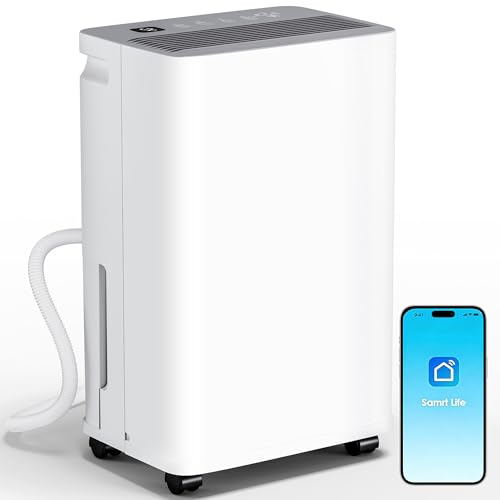


Buying Guide: What to Look for in a Basement Dehumidifier
Dehumidification Capacity and Coverage Area
The most critical factor is how much moisture the unit can remove each day and how large an area it can handle. Capacity is measured in pints per day, typically at standard conditions like 95°F and 90% relative humidity. For a basement, you generally want a model that can handle at least 50 pints per day for spaces up to 2,500 square feet. Larger basements or very damp areas may need 80 to 100 pints. Always match the unit’s coverage to your room size to ensure effective dehumidification.
Consider also the unit’s performance in cooler basement temperatures. Some models struggle below 65°F and may frost up. Look for features like auto-defrost to maintain operation in cooler conditions. For more on sizing, read our article on best dehumidifier for flooded basement.
Drainage Options and Convenience
You do not want to empty a water tank every few hours, especially in a basement you may not visit daily. The best models offer multiple drainage options: a removable tank for occasional use, a gravity drain hose for continuous drainage, and a built-in pump for pumping water upward or to a distant drain. A pump is especially valuable if your basement lacks a floor drain or if you want to route the hose to a sink or window. Units with a pump can lift water 15 feet or more, giving you flexibility in placement.
Energy Efficiency and Operating Costs
A dehumidifier runs for hours each day, so energy efficiency directly impacts your electricity bill. Look for ENERGY STAR certification, which indicates the unit meets strict efficiency guidelines. The highest tier is ENERGY STAR Most Efficient, awarded to only the top performers. These models can save you significant money over time while still delivering powerful moisture removal. Also consider the unit’s power consumption in watts and its energy factor (liters per kWh).
Noise Level and Additional Features
Basement dehumidifiers often run while you are sleeping or working nearby, so noise matters. Look for models rated at 40 to 45 dB or lower for quiet operation. Many units now offer a sleep mode that dims the display and reduces fan speed. Other useful features include a humidistat for precise control, a 24-hour timer, auto restart after power outages, and a child lock for safety. Washable filters reduce maintenance costs and keep the air cleaner.
Final Thoughts
After evaluating these nine models, we believe the avylo Dehumidifier for Basement with Pump stands out for its exceptional energy efficiency, quiet operation, and built-in pump that makes drainage effortless in any basement. For those who need powerful coverage for a very large space, the AEOCKY 6000Sq.Ft Commercial Dehumidifier offers top-tier capacity and the prestigious ENERGY STAR Most Efficient certification, ensuring you get reliable performance with lower energy costs. Whichever you choose, investing in a quality dehumidifier will protect your home and improve your comfort for years to come.
Related Guides
Frequently Asked Questions
What size dehumidifier do I need for my basement?
The size depends on your basement’s square footage and humidity level. For a damp basement up to 2,500 square feet, a 50-pint unit usually works. For larger or very wet basements, consider an 80-pint or higher capacity model. Measure your space and check the unit’s coverage rating to be sure.
Should I get a dehumidifier with a pump?
A pump is highly recommended for basements because it allows you to drain water upward or to a distant sink or drain. This gives you more flexibility in where you place the unit and reduces the need for manual emptying. If your basement has a floor drain, a gravity drain hose may suffice.
How much does it cost to run a basement dehumidifier?
Operating costs vary by model and local electricity rates. Check the current price on Amazon before you buy. For example, a high-efficiency model may cost less than a dollar per day to run continuously. Check the unit’s wattage and your local rate for a precise estimate.
Can a dehumidifier help with mold in the basement?
Yes, by reducing humidity to below 50%, a dehumidifier creates an environment where mold and mildew cannot thrive. It is an effective tool for preventing mold growth and improving air quality. For severe mold issues, combine dehumidification with proper ventilation and cleaning. Learn more in our guide on best dehumidifier for flooded basement.