

If your basement feels damp, musty, or sticky, you know the struggle. High humidity can lead to mold, mildew, and that unpleasant odor that seems to cling to everything. A reliable dehumidifier is the solution, but with so many options, finding the right one can be overwhelming. This guide focuses on the best buy dehumidifier for basement use in 2026, covering top-performing models from Waykar, AEOCKY, KNKA, and more. We’ll break down the key features, capacities, and considerations to help you make an informed choice. Whether you have a small crawl space or a large finished basement, we have picks for you.
For more insights, check out our guide on the best brand of dehumidifier for a basement to see which manufacturers stand out.


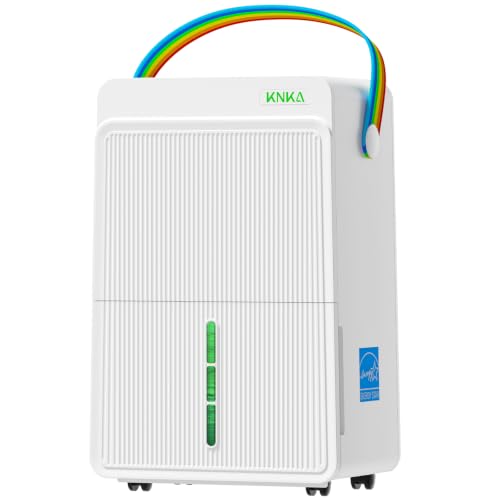





Buying Guide: What to Look For in a Basement Dehumidifier
Capacity: Measured in Pints Per Day
The most critical factor is moisture removal capacity, typically rated in pints per day. For a basement, you’ll want a unit that can handle the square footage and humidity level. Small spaces up to 1,000 sq. ft. might do well with a 28-pint model, while larger basements of 2,500 sq. ft. or more benefit from 50-pint or even 80-pint units. Consider the climate you live in; humid regions require a higher capacity.
For apartment-sized basements, our guide on the best dehumidifier for basement apartment offers tailored advice.
Energy Efficiency
Running a dehumidifier 24/7 can add to your energy bills. Look for ENERGY STAR certified models, which are verified to be more efficient than standard units. Some models, like the AEOCKY 5500 Sq.Ft Energy Star Most Efficient 2025, go a step further with the “Most Efficient” designation, saving you up to 50% on energy costs compared to non-certified units. This is a key consideration for long-term savings.
Drainage Options
Decide between manual emptying and continuous drainage. Most units come with a removable water tank, but for a basement, continuous drainage via a hose is far more convenient. Check if the unit includes a drain hose and if it connects to a standard garden hose for extended reach. This feature allows you to set it and forget it, directing water to a floor drain or sump pump.
Noise Level and Controls
If your basement is a living space, noise matters. Look for models with a decibel rating around 40-45 dB for quiet operation. Also, consider the controls: digital displays, humidity settings, timers, and auto-restart features add convenience. Some models offer smart modes and child locks, which are great for families. For low-temperature basements, check out our best basement dehumidifier for low temperatures guide.
Final Thoughts
Choosing the right dehumidifier for your basement boils down to the size of the space, your humidity levels, and your budget. For large basements needing heavy-duty performance, the Waykar 80 Pints 5000 Sq. Ft 2025 Energy Star is a powerhouse with smart controls and a 90-degree swing airflow. If you prefer a more compact yet efficient option for smaller areas, the 34 Pint/Day Dehumidifier for Basement with Drain offers a great balance of size and effectiveness, ideal for up to 2,500 sq. ft. Both are excellent choices to keep your basement dry, comfortable, and healthy in 2026.
Related Guides
Frequently Asked Questions
What size dehumidifier do I need for my basement?
The size depends on your basement’s square footage and the humidity level. For spaces up to 1,000 sq. ft., a 28-pint model may suffice. For 1,500 to 2,500 sq. ft., consider a 50-pint unit. Larger basements over 3,000 sq. ft. will benefit from 70-pint or 80-pint models. Always check the manufacturer’s coverage rating.
Should I get a dehumidifier with a pump?
A pump is useful if you need to drain water upward, such as to a sink or a drain that is higher than the dehumidifier. If you have a floor drain at the same level, a gravity drain hose is simpler and more reliable. For most basements, a standard gravity drain works fine.
How often should I empty the water tank?
It varies based on humidity and capacity. A 34-pint model can fill a 0.45-gallon tank in several hours under high humidity. To avoid frequent emptying, use continuous drainage with a hose. Many models have auto-shutoff when the tank is full, but continuous drainage is more convenient for long-term use.
Are ENERGY STAR dehumidifiers worth it?
Yes, ENERGY STAR certified models use about 15% less energy than standard models, and the “Most Efficient” designation saves even more. Over time, the energy savings can offset the initial cost. For 2026, choosing an energy-efficient model is a smart investment for both your wallet and the environment. For more top-rated picks, see our best rated basement dehumidifiers list.


