

🔥 Black Friday Dehumidifier Deals 2026: picks worth watching →
If you are tired of that musty smell every time you head down to the basement, you are not alone. A damp basement can lead to mold growth, damaged belongings, and an uncomfortable living environment. This guide reviews the best residential dehumidifiers for basements available in 2026, covering a range of capacities and features to help you choose the right unit for your space. Whether you need a compact solution for a small crawl space or a heavy-duty machine for a large, wet basement, we have options for you.




Buying Guide
Capacity and Coverage Area
The most critical factor is the dehumidifier’s capacity, measured in pints per day. A unit that is too small will run constantly and fail to keep up, while an oversized unit may cycle on and off too frequently. For a standard basement, a 50-pint model is often a good starting point. Our guide on Energy Star dehumidifiers for basements can help you find efficient options that match your square footage.
Drainage Options
Emptying a water tank daily can become a chore. Many modern dehumidifiers offer continuous drainage via a hose, which is ideal for basements where you can run the hose to a floor drain. For basements without a floor drain, consider a model with a built-in pump that can push water upward to a sink or window. The best dehumidifiers for unfinished basements often include pump options for this exact reason.
Noise Level
If your basement is a living space, home theater, or workshop, noise matters. Look for units rated at 42 dB or lower for quiet operation. Compressor-based models are generally louder than Peltier units, but many modern compressors are designed for whisper-quiet performance. For more on this, check out our picks for quiet basement dehumidifiers.
Smart Features and Controls
Smart humidity control, auto defrost, and programmable timers add convenience and efficiency. A dehumidifier that automatically maintains your desired humidity level saves energy and ensures consistent comfort. Some models even offer Wi-Fi connectivity for remote monitoring. Explore our guide on smart dehumidifiers for basements for more details.
Final Thoughts
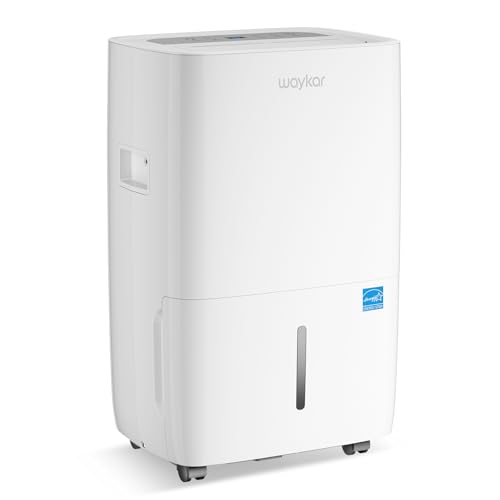
Choosing the best residential dehumidifier for your basement comes down to balancing capacity, drainage, and noise. For most large basements, the Waykar 80 Pints 5000 Sq. Ft 2025 Energy Star offers an outstanding combination of power, efficiency, and smart features. If you need a budget-friendly option that still delivers solid performance for spaces up to 2,500 square feet, the 34 Pints Dehumidifier for Basement with Drain Hose is a reliable and quiet choice.
Related Guides
- Best Buy Dehumidifier for Basement in 2026
- Who Makes the Best Basement Dehumidifier?
- Consumer Report Best Basement Dehumidifier Picks for 2026
Frequently Asked Questions
What size dehumidifier do I need for my basement?
For a moderately damp basement of 1,500 to 2,500 square feet, a 30 to 50-pint unit is usually sufficient. For very wet basements or spaces larger than 3,000 square feet, consider an 80-pint model. The key is to match the unit’s capacity to your basement’s square footage and moisture level.
Should I get a dehumidifier with a pump?
A dehumidifier with a built-in pump is a game-changer if your basement lacks a floor drain. It allows you to route the drain hose upward to a sink, utility tub, or window, making continuous drainage possible without gravity. This is especially useful for very wet basements that require constant moisture removal.
How often should I clean my basement dehumidifier?
Clean the filter every two to four weeks during peak use to maintain airflow and efficiency. The water tank should be emptied daily if not using continuous drainage, and the coils should be inspected and cleaned annually to prevent mold and bacteria buildup.
Can a dehumidifier run continuously in 2026?
Yes, most modern dehumidifiers are designed for continuous operation. Units with Energy Star certification are especially efficient, and models with auto defrost can run safely even in cooler basement temperatures. Just ensure you have a proper drainage setup to avoid frequent tank emptying.


