🔥 Black Friday Dehumidifier Deals 2026: picks worth watching →
If you have an unfinished basement, you know the struggle: damp air, musty smells, and the constant worry about mold. Unlike finished spaces, these areas often lack insulation and proper ventilation, making them prime targets for high humidity. This guide is for homeowners looking for the best dehumidifier for unfinished basement in 2026, covering everything from compact units for small crawl spaces to heavy-duty machines for large, open areas. We have evaluated top brands like Waykar, SEMKAP, KNKA, and more to help you make an informed choice. For more on tackling extreme moisture, check out our guide on the best dehumidifier for very wet basement.


Buying Guide: What to Look for in a Dehumidifier for an Unfinished Basement
Coverage Area and Capacity (Pints per Day)
Unfinished basements vary widely in size. A small storage area might only need a 30-pint unit, while a large, open basement could require an 80-pint model. The capacity, measured in pints per day, tells you how much moisture the unit can remove in high-humidity conditions. Always match the unit’s coverage area (in square feet) to your basement’s actual dimensions for optimal performance.
Drainage Options: Manual vs. Continuous
In an unfinished basement, you may not want to empty a water tank every day. Look for a dehumidifier that offers continuous drainage via a hose. Many models include a gravity drain hose that lets you route water directly to a floor drain or sump pump. This feature is especially valuable for basements you do not visit daily. For more on portable options, see our best portable dehumidifier for basement guide.
Noise Level and Operating Temperature
Unfinished basements often house laundry, workshops, or home gyms. A noisy dehumidifier can be disruptive. Look for units rated 42 dB or lower for quiet operation. Also, check the minimum operating temperature. Basements can get chilly, and some dehumidifiers have auto-defrost features that let them work efficiently down to 41°F, ensuring year-round performance. For a deeper dive, read our guide on who makes the best basement dehumidifier.
Energy Efficiency and Certifications
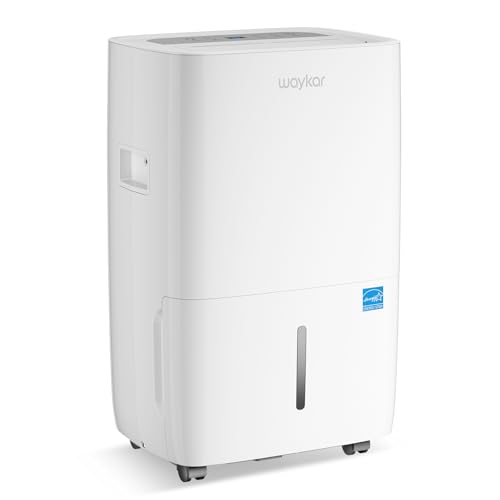
Running a dehumidifier 24/7 can spike your energy bill. Choose an ENERGY STAR certified model to save on electricity costs without sacrificing performance. The Waykar 34 Pints 2025 Most Efficient Energy Star is a standout, using 50% less energy than standard units. This is crucial for basements where the unit runs continuously during humid months.
Final Thoughts
After reviewing the top contenders, the Waykar 80 Pints 5000 Sq. Ft 2025 Energy Star stands out as the ultimate choice for large, unfinished basements, offering powerful moisture removal, quiet operation, and flexible drainage. For smaller spaces or those on a budget, the SEMKAP 2500 Sq.Ft Max 32 Pints Dehumidifier delivers excellent performance with smart controls and a compact footprint. Both models provide reliable, efficient humidity control to keep your basement dry and comfortable year-round.
Related Guides
- Top Dehumidifiers for Attic Spaces in 2026
- 7 Top Dehumidifiers for a 1000 Sq Ft Basement in 2026
- Midea 50 Pint Dehumidifier Review
Frequently Asked Questions
What size dehumidifier do I need for an unfinished basement?
For a typical unfinished basement up to 2,500 sq. ft., a 30 to 34 pint unit is usually sufficient. For larger areas or very damp conditions, consider an 80-pint model. Always measure your space and check the unit’s coverage rating. For more insights, see our basement dehumidifiers category page.
Can I use a dehumidifier in an unfinished basement in winter?
Yes, but choose a model with auto-defrost. Many modern dehumidifiers, like the Waykar 80 Pints and KNKA Energy Star, are designed to operate in temperatures as low as 41°F, making them suitable for year-round use in cold basements.
Should I get a dehumidifier with a pump or gravity drain?
For an unfinished basement, a gravity drain is often the simplest and most reliable option, as long as you have a floor drain or slope to direct water. If your basement lacks a drain, a model with a built-in condensate pump can push water up and out through a window or sink. Both options are available in our top picks.
How often do I need to clean the filter on a basement dehumidifier?
Check the filter every month and clean it with water or a vacuum. In dusty, unfinished basements, you may need to clean it every two to four weeks to maintain airflow and efficiency. Most models have washable, reusable filters that make maintenance simple.
For more options, explore our full dehumidifiers collection and best small space dehumidifiers.