🔥 Black Friday Dehumidifier Deals 2026: picks worth watching →
If you are battling persistent dampness in your basement, you know the struggle: musty odors, condensation on pipes, and the constant worry about mold. A 50-pint dehumidifier with a pump can be your best ally, but choosing the right one requires careful thought. This guide reviews the best 50 pint dehumidifier with pump options on the market in 2026, helping you find a model that fits your space, your needs, and your peace of mind. We have evaluated key features, performance, and convenience to simplify your decision.
Whether you need a unit for a large basement, a crawl space, or a whole-house solution, we have you covered. Our picks range from budget-friendly to high-capacity commercial units, all with built-in pumps for hassle-free continuous drainage. Let’s dive into the top contenders and what makes them stand out.


Buying Guide: What to Look For in a 50-Pint Dehumidifier with Pump
Before you click ‘add to cart’, it’s essential to understand what separates a good dehumidifier from a great one. Here are the key criteria we used to evaluate the models in this review.
Pump Performance and Drainage Options
The built-in pump is the star feature. It allows you to drain water upward or horizontally, which is crucial if your basement lacks a floor drain. Look for models with a pump that can lift water at least 15 feet, and check the included hose length. Some units, like the Hisense Lift-Up, offer a quick-connect hose for easy setup, while others may require a standard garden hose (not always included).
Consider the pump’s noise level and whether it operates automatically when the bucket is full. The best models switch to pump drainage seamlessly, so you never have to empty a bucket manually. For basements, a pump that can route water to a sink or window is a game-changer.
Coverage Area and Capacity
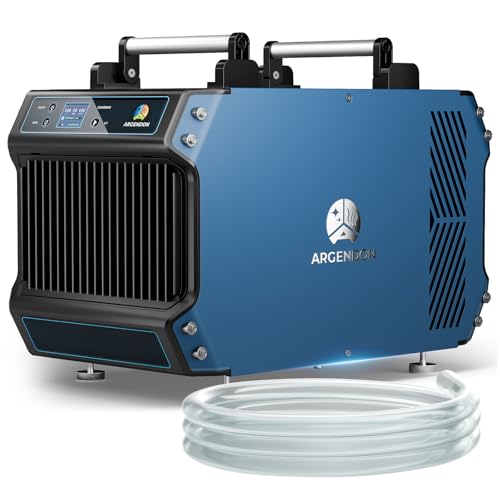
Even though they are all ’50-pint’ units, the actual coverage varies. The DOE standard for 50 pints per day is based on specific conditions (65°F, 60% RH). Some manufacturers also list a higher capacity at 90°F/90% RH. For example, the Amazon Basics model claims up to 102 pints per day under those extreme conditions. Always check the square footage rating for your climate. For a typical basement up to 2,500 sq ft, a 50-pint unit is usually sufficient, but if you have a larger space or high humidity, you might need a more powerful model like the ARGENDON 180-pint unit.
If you are unsure about the right size for your space, our guide on the best whole basement dehumidifier offers additional insights.
Noise Level and Energy Efficiency
Nobody wants a jet engine running in their basement. Look for models with noise ratings around 45-50 dBA, which is quiet enough for a living space. The Midea model boasts a quiet 47 dBA operation. Energy efficiency is also critical, as dehumidifiers run for hours. Look for the ENERGY STAR certification, which ensures the unit uses less electricity without sacrificing performance.
Check the energy factor (liters per kilowatt-hour) if available. A higher number means better efficiency. Also, consider features like auto-defrost, which prevents ice buildup in colder temperatures, and a humidistat that maintains your desired humidity level automatically.
Ease of Maintenance and Additional Features
A washable filter is a must-have for easy upkeep. Some models, like the Frigidaire, feature a filter that you can rinse and reuse. Look for caster wheels and handles for easy mobility, especially if you plan to move the unit between rooms. Smart features, such as Wi-Fi control and voice assistant compatibility, are becoming more common. The Midea model offers app control via SmartHome, allowing you to adjust settings from your phone.
Also, consider the warranty and customer support. A longer warranty, like the 6-year coverage from ALORAIR, provides peace of mind. If you are comparing models, our article on best basement dehumidifier drain to sump pump can help you understand drainage setups better.
Final Thoughts
Choosing the best 50 pint dehumidifier with pump for your basement comes down to your specific needs. For most homeowners, the Amazon Basics 50-Pint Large Dehumidifier offers an unbeatable combination of performance, energy efficiency, and a reasonable price, making it our top pick for general use. If you need a more powerful solution for a larger area or commercial space, the Midea 4,500 Sq. Ft. Dehumidifier With Pump provides smart features and a robust pump, ideal for demanding environments. Whichever you choose, a dehumidifier with a pump will save you the hassle of emptying buckets and help protect your home from moisture damage.
Related Guides
- Best Buy Dehumidifier for Basement in 2026
- Quiet Basement Dehumidifiers
- Who Makes the Best Basement Dehumidifier?
Frequently Asked Questions
How does a dehumidifier with a pump work?
A dehumidifier with a pump uses a small internal pump to push the collected water up and out through a drain hose. This allows you to route the water to a sink, window, or floor drain, even if the drain is higher than the dehumidifier. This eliminates the need to manually empty the water bucket.
Can I use a 50-pint dehumidifier in a crawl space?
Yes, a 50-pint dehumidifier can be used in a crawl space, but you need to ensure it has a pump for proper drainage. Crawl spaces often lack floor drains, so a pump is essential to move water to a higher location. For very large or commercial crawl spaces, you might consider a higher-capacity unit like the ARGENDON 180-pint model.
What is the difference between a 50-pint and a 70-pint dehumidifier?
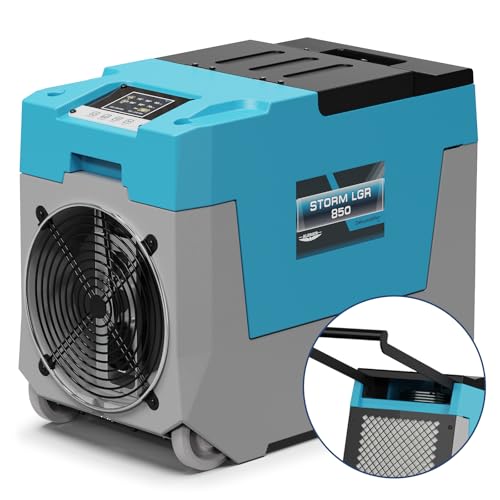
The difference is the amount of moisture they can remove per day. A 50-pint unit is suitable for spaces up to about 2,500 square feet, while a 70-pint unit can handle larger areas or more humid conditions. The ALORAIR 70-pint model is a good example of a higher-capacity option for demanding environments.
Do I need a dehumidifier with a pump if I have a floor drain?
Not necessarily. If you have a floor drain, you can use a gravity drain hose without a pump. However, a pump gives you more flexibility, as you can drain water to a sink or window that is higher than the unit. This is particularly useful in basements without a floor drain or when you want to route water over a wall.
For more information on dehumidifier options, check our basement dehumidifier category.