🔥 Black Friday Air Purifier Deals of 2026: picks worth watching →
If your basement feels damp, musty, or you notice condensation on walls, you know the struggle of managing humidity. A dehumidifier is your best defense, but emptying a water tank daily is a chore. That is why the best basement dehumidifier drain to sump pump setup is a game changer. It connects directly to your sump pump, so you never have to lift a bucket again. In this guide, we review five top-rated models that make continuous drainage easy, covering brands like Waykar, Airzentti, and yaufey. Whether you have a small basement or a large crawl space, we have you covered.


Buying Guide: What to Look For in a Basement Dehumidifier for Sump Pump Drainage
Built-in Pump vs. External Pump
Some dehumidifiers come with a built-in pump that pushes water up to a sump pump or drain. Others rely on gravity drainage, which only works if your sump pump is lower than the unit. For most basements, a model with an integrated pump is more flexible. It can lift water vertically, so you can place the dehumidifier anywhere. If you already own a dehumidifier without a pump, you can add an external pump like the Upgraded Smart Automatic Dehumidifier Pump 15FT to convert it. This approach saves money but requires a bit of setup.
Capacity and Coverage Area
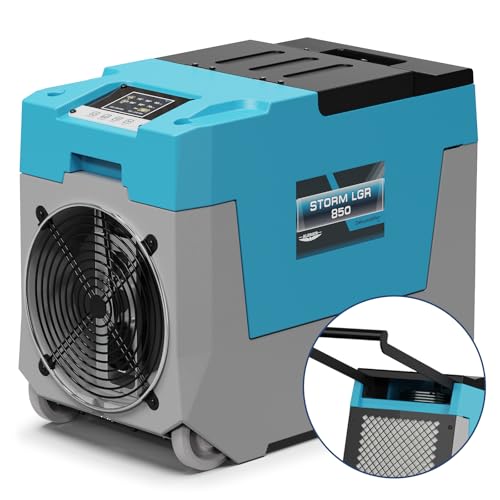
Choose a dehumidifier that matches your basement size. A 28-pint model works for small spaces up to 2,000 square feet. For larger basements, consider 70-pint or 80-pint units that cover up to 5,500 square feet. Commercial models like the Airzentti 155 Pint can handle up to 7,500 square feet. Oversizing is fine, but undersizing leads to constant running and high energy bills. For more tips, check our guide on best energy efficient dehumidifiers for basements.
Drainage Height and Hose Length
When connecting to a sump pump, the vertical lift matters. Most built-in pumps can lift water 15 to 16 feet, which is enough for most basements. The included hose length also varies, from 3 feet to 16 feet. Make sure the hose reaches your sump pump without stretching. Some models accept standard garden hoses for longer runs. If you need extra length, you can buy a longer hose separately. For crawl spaces, a compact unit with a pump is ideal. Read our best dehumidifier for crawlspace article for more details.
Energy Efficiency and Noise Level
An ENERGY STAR certified dehumidifier uses less electricity, which saves money over time. Look for models with the label, like the Waykar 70 Pint. Noise is also important, especially if your basement is used as a living space. Sleep modes that run at 38 dB are barely audible. For comparison, a quiet bedroom is around 30 dB. If you plan to run the unit at night, choose a model with a sleep mode. The hOmeLabs vs AEOCKY dehumidifier comparison offers more insights on quiet operation.
Final Thoughts
Choosing the best basement dehumidifier drain to sump pump setup depends on your space and budget. For large basements or crawl spaces, the Waykar 70 Pint Energy Star Crawl Space offers a powerful built-in pump and durable metal construction. If you prefer a budget-friendly option that still drains continuously, the 80 Pint Dehumidifier for Basement 5500 Sq. Ft. from yaufey provides excellent value and energy efficiency. Both models connect easily to a sump pump, giving you a set-and-forget solution for a dry, healthy basement.
Related Guides
- Best Buy Dehumidifier for Basement in 2026
- Quiet Basement Dehumidifiers
- Who Makes the Best Basement Dehumidifier?
Frequently Asked Questions
Can I connect any dehumidifier to a sump pump?
Not all dehumidifiers have a built-in pump. Models with a pump can drain vertically to a sump pump. For units without a pump, you can use an external pump like the PmpDrTech model. This allows gravity drainage if the sump pump is lower, but a pump is more flexible.
How high can a dehumidifier pump lift water?
Most built-in pumps in dehumidifiers can lift water up to 15 to 16 feet vertically. This is sufficient for most basement installations where the sump pump is at floor level. Always check the product specifications for exact lift height.
Do I need a dehumidifier with a pump if I have a floor drain?
If your floor drain is lower than the dehumidifier, gravity drainage works without a pump. However, many basements have floor drains that are higher or located far away. A pump gives you more placement options and ensures reliable drainage even in challenging setups.
What size dehumidifier do I need for my basement?
For a basement up to 2,000 square feet, a 28-pint model is sufficient. For larger spaces, choose a 70-pint or 80-pint unit. Commercial models like the Airzentti 155 Pint handle up to 7,500 square feet. For more guidance, see our best VEAGASO 28 Pint Dehumidifier review.