🔥 Black Friday Dehumidifier Deals 2026: picks worth watching →
Imagine trying to relax in your basement, but the constant hum of a dehumidifier drowns out your favorite movie or makes it hard to concentrate. You need to control moisture, but you don’t want to trade your peace and quiet for a dry space. That’s exactly why we’ve researched and compared the quietest basement dehumidifiers on the market for 2026. This guide is for homeowners who want effective moisture control without the disruptive noise, covering top models from Waykar, AEOCKY, yaufey, and more. We’ll help you find a unit that operates quietly in the background, so you can enjoy your basement to the fullest. If you’re also curious about energy efficiency, check out our guide on the best Energy Star dehumidifiers for basements.




Buying Guide: What to Look For in a Quiet Basement Dehumidifier
Noise Level (dB)
The most critical factor for a quiet basement dehumidifier is its noise output, measured in decibels (dB). For a truly unobtrusive unit, look for models that operate around 40 dB or lower. This is roughly the sound of a quiet library or a soft whisper, so it won’t interfere with conversation, sleep, or work.
Many of the models we reviewed, like the DREO 4500 Sq Ft Smart Dehumidifier at 41 dB and the BANABIE 2500 Sq.Ft Dehumidifier for Basement at just 32 dB, are engineered with optimized compressors and airflow to minimize noise. Remember that fan speed can affect noise, so a unit with multiple speeds lets you balance performance and quietness.
Dehumidification Capacity (Pints per Day)
Capacity, measured in pints per day, tells you how much moisture the unit can remove. For a basement, you’ll typically need a higher capacity, especially if the space is large or particularly damp. A unit that’s too small will run constantly, which can be noisy and inefficient.
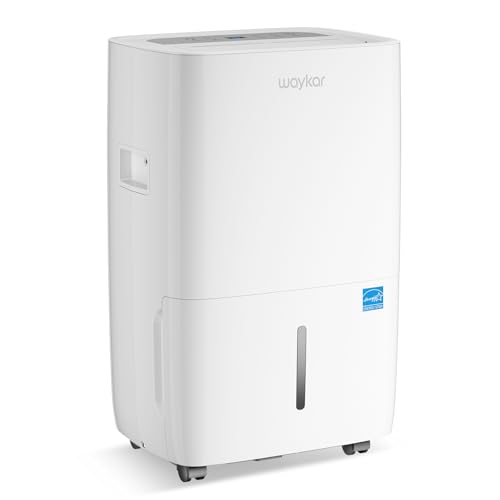
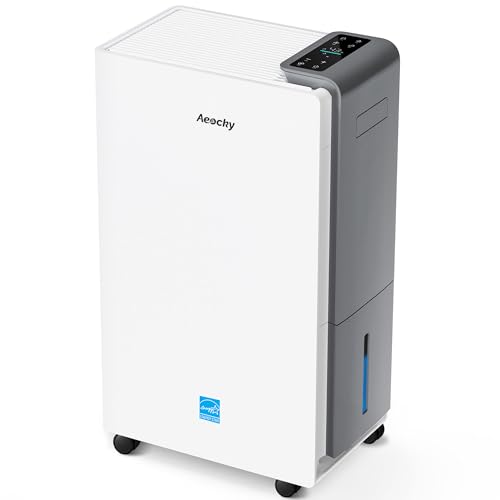
For large basements up to 5,000 square feet, consider the Waykar 80 Pints 5000 Sq. Ft 2025 Energy Star or the AEOCKY 5500 Sq.Ft Energy Star Most Efficient 2025, both of which can handle heavy moisture loads. For smaller spaces, a 32-pint model like the SEMKAP 2500 Sq.Ft Max 32 Pints Dehumidifier might be sufficient. If you have a very wet basement, you might want to check our guide to the best dehumidifiers for very wet basements.
Energy Efficiency (ENERGY STAR)
Running a dehumidifier continuously can add to your energy bill, so choosing an Energy Star certified model is a smart move. These units are designed to use less electricity while still providing effective moisture removal, saving you money over time.
Look for the Energy Star label, and note that some models, like the AEOCKY, even meet the stricter “Most Efficient 2025” criteria. For more on this, see our analysis of who makes the best basement dehumidifiers.
Drainage Options
Consider how you want to manage the collected water. Most dehumidifiers come with a removable water tank that needs to be emptied, but for a basement, continuous drainage via a hose is often more convenient. This allows the unit to run unattended for long periods.
Many of the models we reviewed, including the KNKA Energy Star 5500 Sq.Ft Dehumidifier and the 80 Pint Dehumidifier for Basement 5500 Sq. Ft., include a drain hose for continuous operation. If you prefer a portable option, check out our best portable dehumidifiers for basements.
Final Thoughts
Choosing the right quiet dehumidifier for your basement comes down to balancing noise level, capacity, and efficiency. For a large, demanding space, the Waykar 80 Pints 5000 Sq. Ft 2025 Energy Star offers powerful performance at a quiet 42 dB, while the DREO 4500 Sq Ft Smart Dehumidifier provides smart features and energy monitoring at a similar noise level. Both are excellent choices to keep your basement dry and comfortable without the constant hum.
Related Guides
- Best Buy Dehumidifier for Basement in 2026
- Consumer Report Best Basement Dehumidifier Picks for 2026
- AEOCKY 5500 Sq.Ft Energy Star Review
Frequently Asked Questions
What is the quietest type of dehumidifier?
Thermoelectric or Peltier dehumidifiers are generally the quietest, but they have lower capacity. For basements, compressor-based models with sound-dampening features, like the BANABIE at 32 dB, offer the best balance of quiet operation and effective moisture removal. Check out our guide to Peltier dehumidifiers for more details.
How many pints do I need for a damp basement?
For a moderately damp basement, a 30-50 pint unit is often adequate. For very wet or large basements (over 2,500 sq ft), consider a 70-80 pint model like the Waykar or AEOCKY to ensure it can keep up with the moisture load.
Can I leave a dehumidifier on all the time?
Yes, most modern dehumidifiers are designed for continuous operation. With a drain hose connected, you can run them 24/7. Models with auto-defrost and overheat protection, like the SEMKAP, are safe for extended use.
Where should I place my basement dehumidifier?
Place it in the most humid area, typically near a sump pump or where you notice dampness. Keep it at least a few inches away from walls to allow proper airflow. For optimal performance, keep doors and windows closed while it’s running.