🔥 Black Friday Dehumidifier Deals 2026: picks worth watching →
You walk into your basement and are greeted by that familiar musty smell. The air feels heavy, and you notice a faint dampness on the walls. You know this excess humidity is not just uncomfortable, it is a breeding ground for mold and mildew that can damage your belongings and affect your family’s health. Finding the right solution can feel overwhelming with so many options on the market, but we are here to help you navigate the choices and find the best quality dehumidifier for basement in 2026.
This guide is for homeowners who need a reliable, high-performance dehumidifier to tackle persistent basement moisture. We have evaluated ten of the most popular models, focusing on key factors like moisture removal capacity, energy efficiency, noise levels, and smart features. Our goal is to provide you with clear, actionable information so you can make a confident purchase and finally enjoy a dry, healthy basement. For more on energy-efficient options, check out our guide on the top Energy Star dehumidifiers for basements.





Buying Guide
Moisture Removal Capacity and Coverage Area
The most critical specification is how much moisture a dehumidifier can remove in a day, measured in pints. For a standard basement, a unit that removes 30 to 50 pints per day is often sufficient. However, if your basement is very large or experiences extreme dampness, you may need a 70 or even 80-pint model. Always match the unit’s coverage area (in square feet) to the size of your space for optimal performance.
A unit that is too small will run constantly and never fully dry the air, wasting energy. Conversely, an oversized unit may cycle on and off too frequently, failing to remove humidity evenly. Look for models that clearly state their capacity at standard conditions (86°F, 80% RH) to get a realistic idea of their performance in a typical basement. If you have a very wet basement, you may want to read our guide for very wet basements.
Energy Efficiency and Certification
Running a dehumidifier for hours each day can add to your electricity bill. Choosing an Energy Star certified model ensures the unit meets strict efficiency guidelines set by the U.S. Environmental Protection Agency. These models use advanced compressors and optimized airflow to remove more moisture per kilowatt-hour of electricity, saving you money over the long term.
Some manufacturers also highlight compliance with the latest Energy Star Version 6.0 standards, which represent the highest level of efficiency. While a non-certified unit may have a lower upfront cost, the ongoing energy savings from a certified model often make it the more economical choice within the first year of use. For more information, explore our complete dehumidifier resource.
Drainage Options and Convenience
Emptying a water tank manually can become a chore, especially in a humid basement where the unit fills up quickly. Most dehumidifiers offer two drainage methods: a removable water tank for manual emptying and a port for attaching a garden hose for continuous gravity drainage. For basements without a floor drain, a model with a built-in condensate pump is a game-changer.
A pump allows the dehumidifier to push water upward and out through a window or into a sink, giving you much more flexibility in where you place the unit. Look for models with a generous hose length and a pump that can handle vertical lifts of at least 10 to 15 feet. Additional conveniences like a 24-hour timer, auto-restart after a power outage, and a washable filter add to the overall user experience.
Noise Levels and Smart Features
If your basement is a living space, a home office, or a bedroom, the noise level of the dehumidifier becomes a crucial factor. Many modern units operate around 40 to 45 decibels, which is quieter than a typical conversation and similar to a quiet library. Look for models that advertise low-noise compressors and vibration-reducing designs for the most peaceful operation.
Smart features like a digital humidity display, auto mode that maintains a set humidity level, and a sleep mode that dims lights and lowers fan speed can greatly enhance convenience. Some advanced models even offer remote control or compatibility with smart home systems, allowing you to monitor and adjust settings from your phone. These features make it easier to maintain ideal conditions without constant manual adjustments.
Final Thoughts
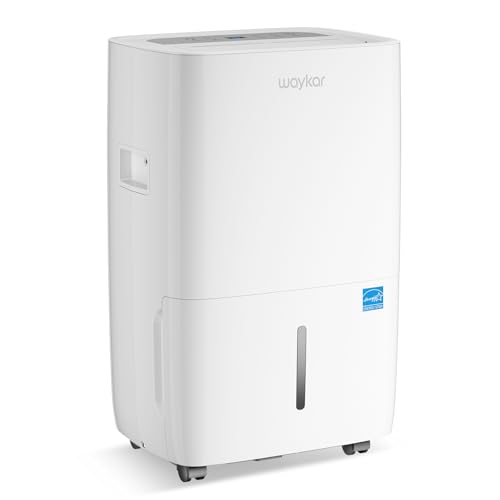
Choosing the best quality dehumidifier for your basement comes down to matching the unit’s capacity and features to your specific needs. For large, very damp spaces that demand powerful and efficient moisture removal, the Waykar 80 Pints 5000 Sq. Ft 2025 Energy Star stands out with its high capacity and smart controls. If you prefer a more budget-friendly option that is exceptionally quiet and perfect for a finished basement or bedroom, the 34 Pints Dehumidifier for Basement with Drain Hose offers excellent value and whisper-quiet operation. Whichever you choose, investing in a quality dehumidifier will protect your home and create a healthier, more comfortable living environment for years to come.
Related Guides
- Best Buy Dehumidifier for Basement in 2026
- Who Makes the Best Basement Dehumidifier?
- Consumer Report Best Basement Dehumidifier Picks for 2026
Frequently Asked Questions
What size dehumidifier do I need for my basement?
For a standard basement up to 1,500 square feet, a 30 to 50-pint model is usually sufficient. For larger basements up to 2,500 square feet, consider a 50 to 70-pint unit. Very large or very damp basements over 2,500 square feet may require an 80-pint or larger model for effective moisture control.
Where should I place a dehumidifier in my basement?
Place the dehumidifier in the center of the room or near the source of moisture, such as a sump pump or crawl space access. Ensure there is at least 6 to 12 inches of space around the unit for proper airflow. Avoid placing it directly against a wall or in a corner, as this can restrict air intake and reduce efficiency.
How often should I clean my basement dehumidifier?
You should clean the washable filter every two to four weeks, especially during heavy use. A dirty filter restricts airflow and forces the unit to work harder, reducing efficiency and increasing energy consumption. Wipe down the exterior and check the drain hose for clogs every few months to ensure optimal performance.
Can a dehumidifier run continuously in a basement?
Yes, most modern dehumidifiers are designed to run continuously, especially in very humid conditions. Many models have a continuous drainage option that connects to a hose, eliminating the need to empty the tank. However, it is a good idea to use the built-in humidistat to set a target humidity level (typically 50% to 60%) so the unit cycles on and off as needed, saving energy and preventing over-drying.