🔥 Black Friday Dehumidifier Deals 2026: picks worth watching →
If your crawl space feels like a swamp, you know the struggle: musty odors, damp insulation, and the constant worry of mold. A high-capacity dehumidifier is the solution, and this Waykar 158 pints crawl space dehumidifier review breaks down the top models for 2026. Whether you need a unit for a tight crawl space, a large basement, or a commercial water damage restoration project, we have you covered. We evaluated seven leading dehumidifiers from Waykar and ALORAIR to help you choose the right one.
This guide covers everything from pint capacity and drainage options to energy efficiency and build quality. We focus on practical, real-world performance for spaces like crawl spaces, basements, and industrial areas. For more context on whole-home solutions, check out our guide on whether a whole house dehumidifier is worth it.


Buying Guide: What to Look for in a Crawl Space Dehumidifier
Pint Capacity and Coverage Area
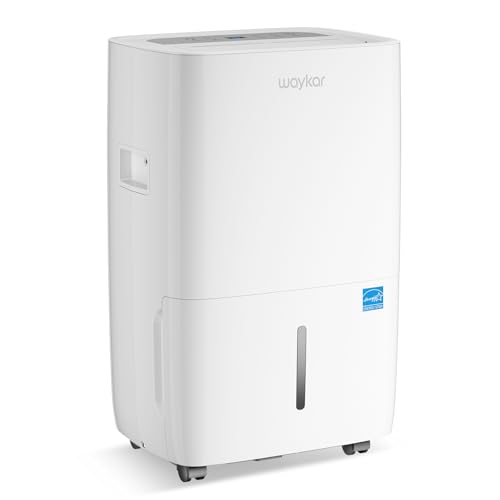
The pint rating tells you how much moisture the unit removes per day under standard conditions (95°F, 90% RH). For a crawl space or basement up to 1,000 sq. ft., a 70-pint model often suffices. For larger spaces up to 6,500 sq. ft., you need 125-pint or 158-pint units. The Waykar 158 Pints Crawl Space Dehumidifier covers the largest area with the highest moisture removal rate.
Always match the capacity to your space’s size and humidity level. A unit that is too small will run constantly without drying effectively. A properly sized unit cycles less, saving energy and extending its lifespan.
Drainage Options: Pump vs. Gravity
In a crawl space, you cannot always rely on gravity drainage. A built-in condensate pump lets you push water upward to a drain or sink, even from a low point. Look for models with a pump hose length of at least 16 feet for vertical lift. All the Waykar models in this review include a pump, while the ALORAIR 113 Pints Crawlspace Dehumidifier also offers continuous drainage via a hose.
For HVAC integration, dual-duct designs (separate intake and exhaust) improve airflow and temperature management. The Waykar 125 Pints and 158 Pints models with dual ducts are ideal for whole-home installations. For more on this, see our guide on top whole house dehumidifiers attached to HVAC.
Energy Efficiency and Certification
Running a dehumidifier 24/7 adds up on your electric bill. ENERGY STAR certified models, like the Waykar 70 Pint Energy Star Crawl Space, use up to 45% less energy than non-certified units. TÜV certification is another mark of rigorous safety and performance standards, found on several Waykar models. A rotary compressor also tends to be quieter and more reliable than piston types.
Always check the energy factor (liters per kWh) if available. Higher numbers mean more moisture removed per unit of electricity. This is especially important for continuous operation in commercial or water damage scenarios.
Build Quality and Warranty
Crawl spaces are harsh environments with moisture, dust, and temperature swings. A full-metal housing resists corrosion and impact better than plastic. Look for adjustable feet to reduce vibration and improve stability. A strong warranty gives peace of mind: Waykar offers a 5-year compressor warranty and lifetime technical support on most models, while ALORAIR provides a 6-year limited warranty on many units.
For more on comparing top brands, read our AlorAir vs AprilAire dehumidifier.
Final Thoughts
After reviewing these seven dehumidifiers, the Waykar 158 Pints Crawl Space Dehumidifier stands out as the best choice for very large spaces up to 6,500 sq. ft., thanks to its dual-duct design, built-in pump, and precise remote sensor. For a more budget-friendly option that still packs serious power, the Waykar 125 Pints Crawl Space Dehumidifier offers excellent value with a rotary compressor and TÜV certification, making it ideal for basements and commercial areas up to the same size. Both come with strong warranties and are built to handle tough conditions, so you can dry out your space with confidence.
Related Guides
- Best Buy Dehumidifier for Basement in 2026
- Quiet Basement Dehumidifiers
- Who Makes the Best Basement Dehumidifier?
Frequently Asked Questions
How do I choose the right pint capacity for my crawl space?
Measure your space in square feet and consider the humidity level. For a crawl space up to 1,000 sq. ft., a 70-pint unit works. For 2,000 to 6,500 sq. ft., choose a 125-pint or 158-pint model. Higher capacity also means faster drying for water damage restoration.
Do I need a dehumidifier with a pump for my basement?
Yes, if your basement or crawl space does not have a floor drain or if you need to drain water upward. A built-in pump allows you to route the hose to a sink, laundry tub, or outside. All Waykar models in this review include a pump with a 16.4 ft vertical lift.
Can I use a crawl space dehumidifier for a whole house?
Yes, especially if the unit has a dual-duct design and can be integrated with your HVAC system. Models like the Waykar 158 Pints and 125 Pints with dual ducts are designed for whole-home humidity control. For more on this, see our guide on whole house dehumidifiers attached to HVAC.
How often should I clean the filter on a crawl space dehumidifier?
Check the filter every two to four weeks, especially in dusty environments like crawl spaces or construction areas. A clean filter maintains airflow and efficiency. Most models have a washable filter that you can rinse with water.