🔥 Black Friday Dehumidifier Deals 2026: picks worth watching →
If you’re dealing with a very wet basement, you know the struggle: damp air, musty odors, and the constant threat of mold and mildew. A standard dehumidifier often can’t keep up. You need a powerful, reliable unit specifically designed for high-moisture environments. In this guide, we’ve evaluated the top contenders for the best dehumidifier for very wet basement conditions in 2026, covering everything from Energy Star certified models to commercial-grade workhorses. Whether you’re tackling a flooded crawlspace or just want to keep your finished basement dry, we’ve got you covered.
We’ve spent hours researching and comparing the latest models, focusing on extraction capacity, durability, and ease of use. Our goal is to help you find a unit that not only removes excess moisture but also stands up to the unique challenges of a very wet basement. For more insights on what makes a great basement dehumidifier, check out our guide to the best basement dehumidifier brands.


Buying Guide: What to Look For in a Dehumidifier for a Very Wet Basement
Choosing the right dehumidifier for a very wet basement isn’t just about picking the biggest one. You need to consider several key factors to ensure it can handle the specific conditions of your space. Here are the most critical criteria we used to evaluate the models in our list.
Extraction Capacity (Pints per Day)
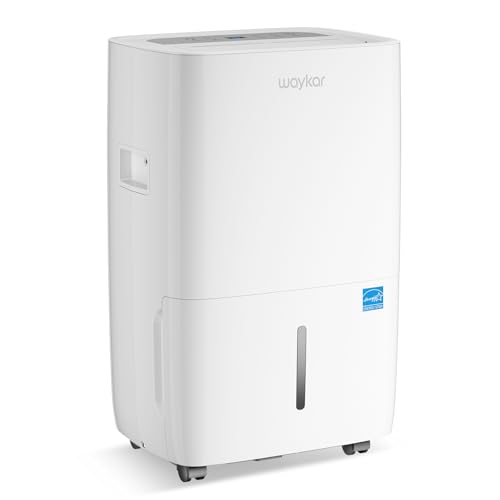
The most important spec is how much moisture the unit can remove in a day, measured in pints. For a very wet basement, you’ll want a high-capacity model, typically 50 pints or more. Units like the Waykar 80 Pints and the ZAFRO 150 Pints are designed for these tough conditions. Larger capacity means faster drying and less frequent emptying.
Consider the size of your basement and the severity of the moisture. A larger unit might be overkill for a small, moderately damp space, but for a truly wet basement, you can’t go wrong with a high-capacity model. For more on high-capacity options, see our roundup of high-capacity dehumidifiers.
Drainage Options: Pump vs. Gravity vs. Bucket
In a very wet basement, you don’t want to be manually emptying a water tank every few hours. Look for a unit with a built-in pump (like the Midea 4,500 Sq. Ft. with Pump) that can push water up and out through a window or sink. Continuous drainage via a garden hose is also a great option, but a pump offers the most flexibility.
If you prefer a simpler setup, some models like the Waykar 80 Pints come with a drain hose for gravity drainage. Just make sure the hose can be positioned to allow water to flow downhill. The convenience of a pump is a game-changer for many users.
Energy Efficiency and Operating Costs
Running a dehumidifier 24/7 can add up on your energy bill. That’s why Energy Star certification is so important. Models like the Waykar 80 Pints and ZAFRO 7500 Sq.Ft are Energy Star certified, meaning they meet strict efficiency guidelines. This can save you money over time while still delivering powerful performance.
Also, look for features like auto-defrost and smart humidity control, which can help the unit operate more efficiently. For a very wet basement, you might also want to consider a unit with a longer warranty, as it will be working hard. Check out our best overall dehumidifiers for more efficiency tips.
Durability and Build Quality
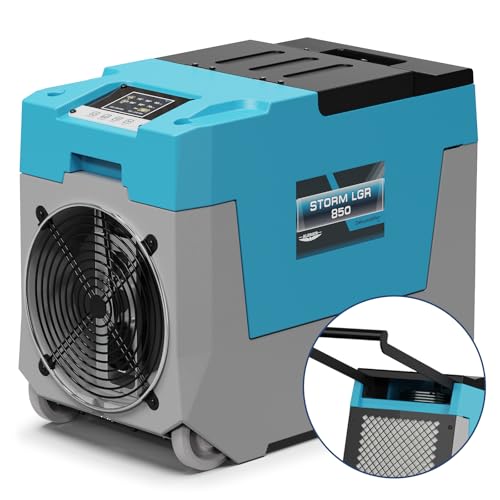
A very wet basement can be a harsh environment for electronics. Look for a unit with a durable construction, ideally with a metal or heavy-duty plastic housing. Commercial-grade models like the AlorAir 180 PPD are built to withstand job-site conditions and are a great choice for extreme moisture.
Additionally, consider the warranty. A longer warranty (like the 6-year limited warranty from ALORAIR) gives you peace of mind that the manufacturer stands behind their product. Also, check for features like automatic defrost, which protects the unit in cooler basement temperatures.
Final Thoughts
When it comes to tackling a very wet basement, you need a dehumidifier that can handle the heavy lifting. After our thorough evaluation, we recommend the Waykar 80 Pints 5000 Sq. Ft 2025 Energy Star for most homeowners, as it offers an excellent balance of power, efficiency, and smart features. For those facing extreme conditions or commercial-grade needs, the AlorAir 180 PPD LGR Commercial Dehumidifier is a top-tier choice that won’t let you down. Whichever you choose, you’ll be well on your way to a drier, healthier basement.
Related Guides
- Top Dehumidifiers for Attic Spaces in 2026
- 7 Top Dehumidifiers for a 1000 Sq Ft Basement in 2026
- Midea 50 Pint Dehumidifier Review
Frequently Asked Questions
What size dehumidifier do I need for a very wet basement?
For a very wet basement, you’ll want a unit with at least 50 pints per day capacity. For larger areas or severe moisture, consider 80-pint or even 150-pint models like the ZAFRO 7500 Sq.Ft. The size of your basement also matters; measure the square footage and match it to the dehumidifier’s coverage area.
Should I get a dehumidifier with a pump?
Yes, a pump is highly recommended for a very wet basement. It allows you to drain the water up and out through a window or sink, so you don’t have to manually empty the bucket. This is especially useful if your basement doesn’t have a floor drain. The Midea 4,500 Sq. Ft. Dehumidifier With Pump is a great option.
How often do I need to empty a dehumidifier in a wet basement?
It depends on the unit’s tank size and the humidity level. In a very wet basement, a 50-pint unit with a standard bucket might need emptying every 8-12 hours. To avoid this, use continuous drainage or a pump. Some models, like the Midea Cube, have larger tanks that can run longer between empties.
Are Energy Star dehumidifiers worth it for a wet basement?
Absolutely. Energy Star certified models, such as the Waykar 80 Pints, use less electricity while providing the same or better moisture removal. This can significantly reduce your energy bills, especially if you run the unit constantly. Plus, they often come with advanced features like smart controls and auto-defrost. For more tips, check out our portable dehumidifier guide.