🔥 Black Friday Dehumidifier Deals 2026: picks worth watching →
Imagine walking into your basement after a heavy storm and finding inches of water. Panic sets in, but the real battle begins after the water is pumped out. Lingering moisture can lead to mold, mildew, and structural damage within days. That’s where a powerful dehumidifier becomes your best ally. This guide reviews the top dehumidifiers for flooded basements in 2026, focusing on high-capacity units that can handle extreme moisture and help you restore your space to a safe, dry condition.
We’ve evaluated seven leading models based on extraction rate, drainage options, energy efficiency, and durability. Whether you need a compact unit for a small crawl space or a heavy-duty machine for a large basement, we have you covered. For a deeper dive into dampness issues, check out our guide on the best dehumidifier for damp basement.


Buying Guide: What to Look for in a Flooded Basement Dehumidifier
Choosing the right dehumidifier for a flooded basement isn’t just about picking the biggest unit. You need to consider several critical factors to ensure effective drying and long-term performance. Here are the key criteria we used to evaluate these products.
Extraction Rate (Pints per Day)
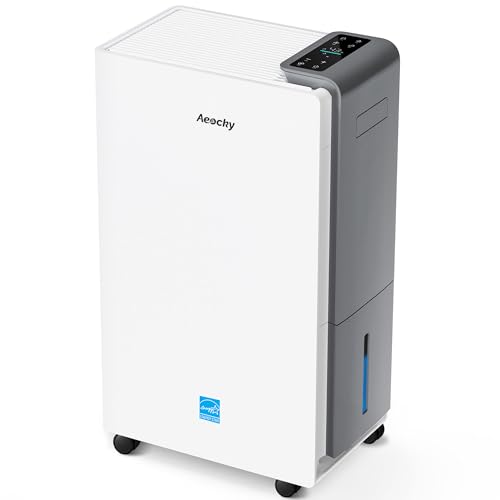
For a flooded basement, you need a unit with a high extraction rate, measured in pints per day. Standard dehumidifiers remove 30 to 50 pints, but for severe flooding, look for models that can pull 70 to 80 pints. The KNKA Energy Star 5500 Sq.Ft Dehumidifier and the AEOCKY 5500 Sq.Ft Energy Star Most Efficient 2025 both offer 80-pint capacity, making them ideal for rapid drying.
Remember, the extraction rate is often measured at specific temperatures and humidity levels. A unit rated at 80 pints at 95°F and 90% RH will perform differently in a cooler basement. Always check the ratings for typical basement conditions (around 86°F and 80% RH) to get a realistic idea of performance.
Drainage Options
Continuous drainage is a game-changer for flooded basements. Instead of emptying a water tank every few hours, you can connect a hose and let the unit run unattended. Look for models that include a drain hose and have a gravity-fed or pump-assisted drainage system. The KNKA 2500 Ft² Max 34 Pints Dehumidifier offers three drainage options, including a hose connection, which is perfect for long-term drying.
If you plan to use the water tank, consider its capacity. A larger tank means fewer trips to the sink, but in a flood scenario, continuous drainage is far more practical. Some units, like the Niuteri Dehumidifier, 98OZ Dehumidifiers, come with both a tank and a hose, giving you flexibility.
Energy Efficiency and Operating Costs
Running a dehumidifier 24/7 can spike your energy bills. That’s why we prioritize ENERGY STAR certified models. These units use less electricity while delivering the same performance. The Waykar 34 Pints 2025 Most Efficient Energy Star is certified as the 2025 ENERGY STAR Most Efficient, meaning it uses 50% less energy than standard models. This can translate to significant savings over the drying period.
Also, look for features like auto-defrost, which prevents ice buildup in cooler basements, and a humidistat that automatically cycles the unit on and off to maintain your desired humidity level. These features not only save energy but also protect the unit from damage.
Durability and Build Quality
Flooded basements are harsh environments with high humidity and potential for water splashes. You need a dehumidifier built to last. Look for models with corrosion-resistant coils, such as copper tubing, and a sturdy exterior. The AEOCKY 5500 Sq.Ft Energy Star Most Efficient 2025 boasts a high-efficiency rotor compressor and copper coils, ensuring longevity even in demanding conditions.
Also, consider the warranty. A longer warranty indicates the manufacturer’s confidence in the product. Many top brands offer 1-3 years of coverage, which gives you peace of mind. For more insights on durable options, explore our best dehumidifier for cellar guide.
Final Thoughts
When your basement floods, speed and efficiency are paramount. For large, severely flooded areas, the KNKA Energy Star 5500 Sq.Ft Dehumidifier is our top pick due to its massive 80-pint capacity and flexible drainage. If you need a more compact yet powerful option for smaller spaces or a quick response, the Dehumidifiers for Home, 1000 Sq Ft Dehumidifier offers quiet operation and auto-shutoff, making it a reliable choice for continuous use. Both units will help you reclaim your basement and prevent long-term moisture damage.
Related Guides
- Top Dehumidifiers for Attic Spaces in 2026
- 7 Top Dehumidifiers for a 1000 Sq Ft Basement in 2026
- Midea 50 Pint Dehumidifier Review
Frequently Asked Questions
How long does it take to dry out a flooded basement with a dehumidifier?
The time depends on the severity of the flood, the size of the basement, and the dehumidifier’s capacity. A high-capacity unit (80 pints) can significantly reduce humidity within 24-48 hours, but complete drying may take several days to a week. Ensure proper ventilation and use continuous drainage for best results.
Should I use a dehumidifier or a fan to dry a flooded basement?
Both are useful, but they serve different purposes. Fans circulate air to speed up evaporation, while dehumidifiers remove moisture from the air. For a flooded basement, use both: fans to dry surfaces and a dehumidifier to control humidity levels. This combination accelerates the drying process and prevents mold growth.
Can a portable dehumidifier handle a flooded basement?
Portable units are effective for small areas or as a supplement to a larger system. For a flooded basement, you need a unit with a high extraction rate (at least 50 pints) and continuous drainage. Small portable models can be used in tight spaces, but for extensive flooding, a full-size dehumidifier is recommended. For small spaces, check out our best small dehumidifier for bathroom guide.
What is the ideal humidity level for a basement after a flood?
After a flood, aim for a relative humidity (RH) between 30% and 50%. This range prevents mold growth and makes the space comfortable. Most dehumidifiers allow you to set a target RH, and the unit will automatically maintain it. For more tips, read our article on best Frigidaire dehumidifiers for basement.