

🔥 Black Friday Dehumidifier Deals 2026: picks worth watching →
Walking into a damp basement is never pleasant. That musty smell, the clammy feeling in the air, and the constant worry about mold creeping up the walls can turn an otherwise useful space into a place you avoid. If you’re tired of dealing with excess moisture, you’re likely searching for the best dehumidifier for damp basement conditions. This guide will walk you through the top-rated models designed to tackle high humidity head-on, helping you reclaim your basement for storage, a home gym, or a cozy family room.
We understand that choosing the right dehumidifier can feel overwhelming with so many options on the market. That’s why we’ve researched and compared nine of the most promising units, focusing on capacity, energy efficiency, drainage options, and noise levels. Whether you have a small, slightly damp space or a large, chronically wet basement, we have a recommendation that will fit your needs. Let’s dive in and find the perfect solution to banish that dampness for good.




Buying Guide: What to Look For in a Basement Dehumidifier
Before you make a purchase, it’s crucial to understand the key features that separate a good dehumidifier from a great one for your specific situation. Here are the most important factors to consider when shopping for the best dehumidifier for damp basement environments.
Capacity: Matching Pints to Square Footage
The capacity, measured in pints per day, is the most critical specification. It tells you how much moisture the unit can remove in 24 hours. For a small, slightly damp basement (up to 1,000 sq ft), a 30-34 pint model might suffice. However, for larger spaces or severely damp conditions, you’ll need a heavy-duty unit with 70-80 pints of daily capacity. Check the manufacturer’s recommendations for square footage, but always err on the side of a higher capacity for a basement, as they tend to be more humid than other areas of the home. If you’re dealing with a particularly small space, you might also want to check out our guide on the best dehumidifier for small basement.
Drainage Options: Continuous vs. Manual
Basements often need continuous operation, which means you don’t want to be emptying a water tank every few hours. Look for a model that offers multiple drainage options. A built-in water tank with an auto-shutoff feature is convenient for occasional use, but a drain hose connection for continuous gravity drainage is a game-changer. For the ultimate convenience, consider a unit with a built-in condensate pump, which can push water upward to a sink or drain, as seen in the best heavy-duty basement dehumidifier models.
Energy Efficiency: Save Money and Energy
Running a dehumidifier 24/7 can add up on your electricity bill. That’s why choosing an ENERGY STAR certified model is a smart investment. These units are designed to use less energy while still providing powerful moisture removal. Look for the ENERGY STAR Most Efficient label for top-tier performance, which can save you a significant amount over the long run. This is particularly important if you plan to run the unit continuously, as is often necessary in a damp basement. For more insights on efficient systems, see our article on best dehumidifier systems for basements.
Noise Level: For Comfort and Peace of Mind
If your basement is a living space, a home office, or a bedroom, the noise level of the dehumidifier matters. Many modern units operate at around 40-45 dB, which is comparable to a quiet conversation or the hum of a refrigerator. However, some models are even quieter, with sleep modes that drop the noise further. If you’re sensitive to sound, look for a unit with a low decibel rating and a sleep mode that dims or turns off indicator lights. Check out our best dehumidifier for a room guide for more on quiet models.
Final Thoughts
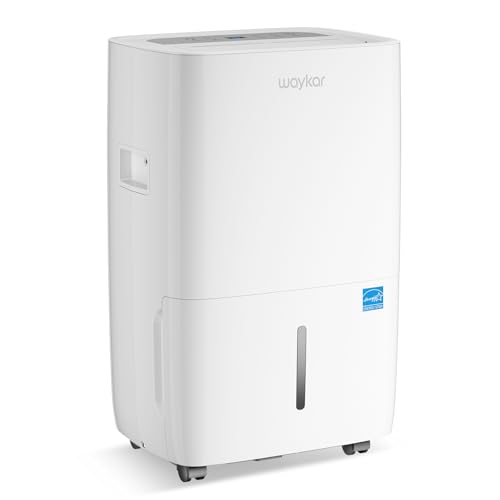
Choosing the right dehumidifier is a crucial step in protecting your home and health. For most large, chronically damp basements, the Waykar 80 Pints 5000 Sq. Ft 2025 Energy Star offers an exceptional balance of power, efficiency, and smart features. If you’re looking for a more budget-friendly option for a smaller space, the Dehumidifiers for Home, 1000 Sq Ft Dehumidifier is a solid, quiet choice. Whichever you choose, you’ll be well on your way to a drier, healthier basement.
Related Guides
- Top Dehumidifiers for Attic Spaces in 2026
- 7 Top Dehumidifiers for a 1000 Sq Ft Basement in 2026
- Midea 50 Pint Dehumidifier Review
Frequently Asked Questions
What size dehumidifier do I need for a damp basement?
For a damp basement, you generally need a larger capacity unit. A 50-pint model is often recommended as a starting point for a standard-sized basement (up to 1,500 sq ft). For larger spaces or very wet conditions, consider a 70-80 pint unit. It’s always better to have a unit with slightly more capacity than you think you need.
Should I get a dehumidifier with a pump?
Yes, a dehumidifier with a built-in pump is highly recommended for basements. It allows you to drain the collected water upward to a sink or floor drain, eliminating the need to manually empty a bucket. This is especially useful if your basement doesn’t have a floor drain. It makes the unit truly set-and-forget.
How often should I run a dehumidifier in my basement?
In a damp basement, you’ll likely need to run the dehumidifier continuously to maintain a healthy humidity level of 30-50%. Many units have a built-in humidistat that automatically turns the unit on and off to maintain your desired setting, which helps save energy. Running it continuously, especially during humid months, is the most effective way to prevent mold and mildew growth. For allergy sufferers, this is particularly important, and you can read more in our best dehumidifier for allergy sufferers guide.
Can a dehumidifier remove musty smells from my basement?
Yes, by reducing the humidity level, a dehumidifier can significantly reduce or eliminate the musty odors associated with dampness and mold. The unit removes the moisture that allows mold and mildew to thrive, which are the primary sources of that unpleasant smell. While it may not remove existing mold stains, it will stop the problem from getting worse and make the air much fresher.


