🔥 Black Friday Dehumidifier Deals 2026: picks worth watching →
If you are dealing with a damp, musty basement that never seems to dry out, you know the struggle. High humidity can lead to mold, mildew, and a general feeling of discomfort. This guide is for homeowners and property managers who need a serious, heavy-duty solution to reclaim their basement space. We have evaluated the top models on the market to help you choose the right one for your needs. For more context on choosing the right unit, you can also check out our guide on the best dehumidifier for a room.





Buying Guide
Capacity and Coverage Area
The most critical factor is how much moisture the dehumidifier can remove and how large a space it can handle. Capacity is measured in pints per day, and coverage in square feet. For a heavy-duty basement, you want a unit that can process at least 80 pints per day, ideally more. Models like the Moiswell 200 Pints Commercial Dehumidifier are built for the largest spaces, while the KNKA Energy Star 5500 Sq.Ft Dehumidifier offers a solid balance for most basements.
Always match the dehumidifier’s capacity to the size of your basement and the severity of your humidity problem. A unit that is too small will run constantly without ever catching up, wasting energy. A properly sized unit will cycle on and off efficiently. For smaller areas, our guide on the best dehumidifier for small basement may be helpful.
Drainage Options: Pump vs. Gravity
How you plan to drain the collected water is a major consideration. Most heavy-duty units offer continuous drainage via a garden hose, which relies on gravity and requires the unit to be elevated. However, many basements lack a floor drain, making a built-in condensate pump a game-changer. Models like the Moiswell 160 Pints Commercial Dehumidifier and the Airzentti 155 Pint Commercial Dehumidifier include pumps that can push water up and out, allowing for flexible placement without worrying about a downhill slope.
If you have a drain at floor level, gravity drainage is simple and reliable. If not, investing in a unit with a pump saves you the hassle of manually emptying a heavy water tank. This is especially important for a set-and-forget solution in a basement.
Energy Efficiency and Certifications
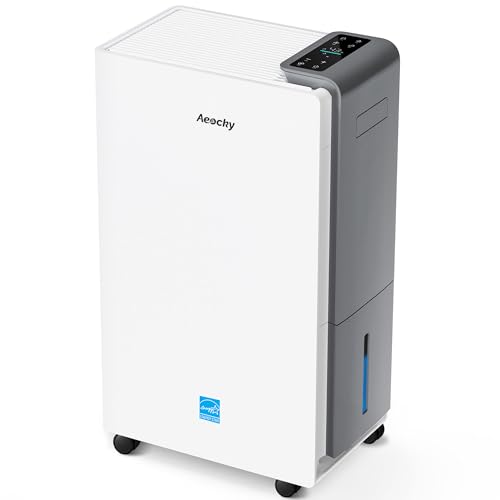
Running a heavy-duty dehumidifier can add to your electricity bill, so energy efficiency is key. Look for ENERGY STAR certified models, which are independently verified to use less energy. Some models, like the AEOCKY 6000Sq.Ft Commercial Dehumidifier, even carry the stricter “ENERGY STAR Most Efficient” designation, which represents the top tier of efficiency. This certification ensures you are getting powerful performance without excessive energy costs, which is crucial for units that may run for many hours each day.
Smart Features and Controls
Modern dehumidifiers offer a range of smart features that enhance convenience. Wi-Fi connectivity, as seen on the 6000 Sq.Ft. Energy Star Dehumidifier for Basement, allows you to monitor and control humidity levels from your phone, even when you are not home. Other useful features include programmable timers, auto-defrost for cooler basements, and child locks. A user-friendly control panel with a clear display makes it easy to set your desired humidity level, typically between 30% and 80%.
Final Thoughts
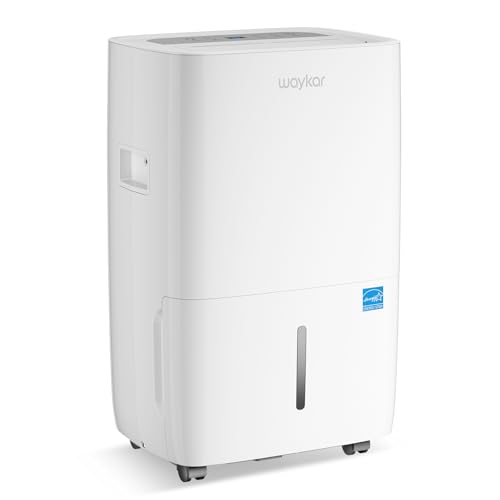
Choosing the best heavy duty basement dehumidifier comes down to your specific space and needs. For most large basements, the Waykar 80 Pints 5000 Sq. Ft 2025 Energy Star offers an outstanding balance of capacity, smart features, and quiet operation at a very competitive price point. If you need maximum power for a commercial-grade application or a very large area, the Moiswell 160 Pints Commercial Dehumidifier with its built-in pump provides unmatched moisture removal and flexible drainage, making it the ultimate solution for the toughest humidity challenges.
Related Guides
Frequently Asked Questions
How big of a dehumidifier do I need for my basement in 2026?
For a standard basement, a unit rated for 50 to 70 pints per day is often sufficient, but heavy-duty models of 80 pints or more are recommended for very damp or large basements. Always measure your basement’s square footage and consider the humidity level. You can also read our article on the best dehumidifier for a 1000 sq ft basement for more specific guidance.
What is the difference between a gravity drain and a pump drain?
A gravity drain relies on the force of gravity to move water through a hose, so the dehumidifier must be placed higher than the drain point. A pump drain uses a small internal pump to push water upward, allowing you to drain into a sink or through a wall, even if the drain is above the unit.
Are heavy duty dehumidifiers very loud?
Noise levels vary, but many modern heavy-duty models are designed with quiet operation in mind. Units like the Waykar 80 Pints operate at around 42 dB, which is comparable to a quiet conversation. Look for units with optimized compressors and vibration-reducing features for the quietest performance.
Can I use a heavy duty dehumidifier in a cold basement?
Yes, but you need a model with an auto-defrost function. In cooler temperatures (below 65°F), frost can build up on the coils, which can damage the unit. Most heavy-duty models, including those from Moiswell and AEOCKY, include intelligent auto-defrost to ensure reliable operation even in chilly basements.