

You walk into your basement and that familiar musty smell hits you. Damp air clings to everything, and you know it is only a matter of time before mold or mildew starts taking hold. A large capacity dehumidifier is the answer, but with so many options, finding the right one can feel overwhelming. This guide is designed to help you cut through the noise and find the best large capacity dehumidifier for basement spaces in 2026.
Whether you are dealing with a finished basement, a crawl space, or a massive workshop, we have evaluated the top contenders. We focus on models that can handle high humidity levels and large square footage, ensuring you get reliable, long-lasting performance. For more targeted advice, you might also check out our guide on the best dehumidifier for bedroom if you need a unit for smaller, enclosed spaces.
Product Comparison






Buying Guide: How to Choose a Large Capacity Basement Dehumidifier
Selecting the right dehumidifier involves more than just picking the biggest one. You need to consider your specific space, humidity levels, and desired features. Here are the key criteria we used to evaluate these models.
Square Footage Coverage and Pint Capacity
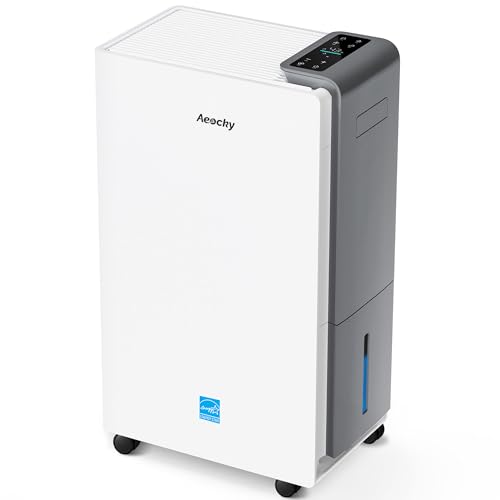
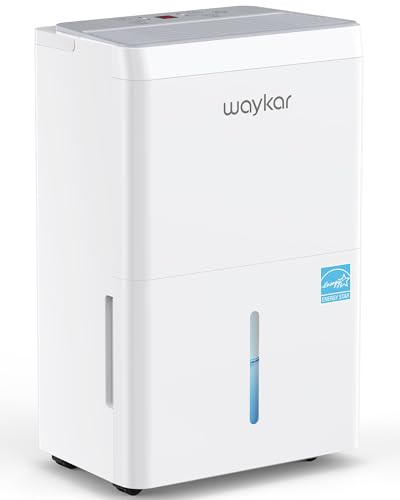
The first thing to look at is how much space the unit can handle. A dehumidifier’s capacity is measured in pints per day, and this directly correlates to the square footage it can effectively dehumidify. For a large basement, you typically need a unit that can handle at least 4,000 to 6,000 square feet. Models like the Waykar 150 Pint Commercial Dehumidifier with Pump are designed for up to 7,000 square feet, making them ideal for very large or commercial spaces. For more typical home basements, a 70 to 80 pint model is often sufficient. You can also read our AEOCKY 5500 Sq.Ft energy star review for an in-depth look at a popular mid-range option.
Energy Efficiency and Certification
Running a dehumidifier 24/7 can add up on your energy bill. That is why we prioritize ENERGY STAR certified models. These units are verified to use significantly less electricity than standard models while delivering the same or better performance. Some models, like the AEOCKY 6000Sq.Ft Commercial Dehumidifier, even carry the “ENERGY STAR Most Efficient” designation, which is the highest level of certification. This not only saves you money but also reduces your environmental footprint.
Drainage Options and Convenience
Nobody wants to manually empty a water tank every few hours, especially in a basement. Look for models that offer flexible drainage. A built-in pump is a game-changer because it can push water upward to a sink or floor drain, even if the dehumidifier is in a low spot. Many units also come with a standard drain hose for gravity drainage. The avylo Dehumidifier for Basement with Pump is a great example of a unit that offers both a large tank and a pump for continuous operation. For more insights, see our waykar 80 pints energy star dehumidifier review.
Noise Level and Additional Features
If your basement is used as a living space, home theater, or workshop, noise matters. Many modern dehumidifiers operate at whisper-quiet levels, often around 40 to 45 dB, which is comparable to a quiet library. Features like auto-defrost, smart humidity control, and a 24-hour timer also add to the convenience. If you are dealing with a cold basement, you may want to check our guide on the best dehumidifier for cold basement for units that perform well in lower temperatures.
Final Thoughts
Choosing the best large capacity dehumidifier for your basement comes down to matching the unit’s features to your specific needs. For most homeowners, the Waykar 80 Pints 5000 Sq. Ft 2025 Energy Star offers a perfect balance of power, efficiency, and smart features at a great value. If you need even more capacity and the convenience of a built-in pump for continuous drainage, the Waykar 150 Pint Commercial Dehumidifier with Pump is an outstanding choice for very large or challenging spaces.
Related Guides
Frequently Asked Questions
What size dehumidifier do I need for a large basement?
For a large basement, you generally need a unit that can handle at least 4,000 to 5,000 square feet. Look for models with a capacity of 70 to 80 pints per day or more. If your basement is very damp or has a high ceiling, you may need an even larger unit, like a 120 or 150 pint model.
Is a dehumidifier with a pump worth it for a basement?
Yes, a dehumidifier with a built-in pump is highly recommended for basements. It allows the unit to drain water upward to a sink, floor drain, or even outside, eliminating the need for a floor drain or a gravity-fed hose. This makes it ideal for basements where the dehumidifier is placed in a low spot. For more information, check our guide on the best commercial dehumidifier for basement.
How much does it cost to run a large dehumidifier in 2026?
The cost to run a large dehumidifier varies based on your local electricity rates and the unit’s energy efficiency. ENERGY STAR certified models can save you up to 50% on energy costs compared to non-certified models. On average, running a large dehumidifier 24 hours a day can cost between $0.50 and $1.50 per day, depending on the model and settings.
Can I use a large dehumidifier in a crawl space?
Yes, many large capacity dehumidifiers can be used in crawl spaces, but you need to consider the unit’s size and drainage options. A model with a built-in pump and a compact footprint is often best for crawl spaces. For specific recommendations, see our article on the best dehumidifier for crawl space under house.
How often should I clean my basement dehumidifier?
You should clean the filter every two to four weeks, depending on usage and dust levels. A clean filter ensures efficient airflow and optimal performance. Additionally, you should wipe down the exterior and check the drain hose for clogs every few months. For more tips, read our guide on the best dehumidifier for finished basement.

