🔥 Black Friday Air Purifier Deals of 2026: picks worth watching →
If you’ve noticed a musty smell in your basement, condensation on your windows, or a persistent feeling of dampness in the air, you might be wondering: is a whole house dehumidifier worth it? This is a common question for homeowners dealing with high humidity, and the answer depends on several factors. In this guide, we’ll explore the real benefits, costs, and what to look for in a unit, so you can make an informed decision for your home.
We’ll review seven top-rated models that range from compact units for smaller spaces to powerful commercial-grade machines. We’ll also provide a detailed buying guide to help you choose the right one. If you’re new to this, you might want to check our top whole house dehumidifiers for 2026 for a broader overview before diving into the specifics.


Buying Guide: What to Consider
Capacity and Coverage Area
The most critical factor is the dehumidifier’s capacity, measured in pints per day. A larger capacity unit is needed for bigger spaces or very humid conditions. For a typical basement, a 50-70 pint unit may suffice, but for a whole house or large crawl space, you’ll want something in the 125-160 pint range.
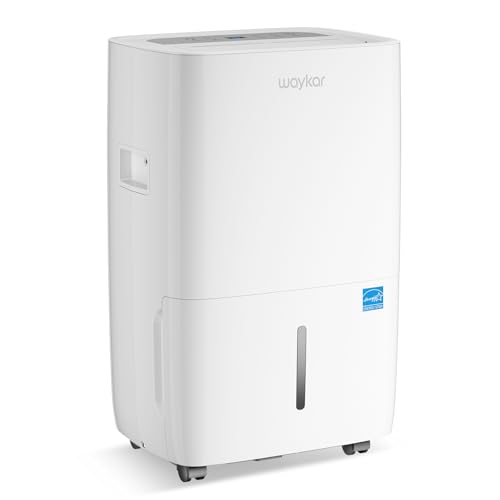
Check the manufacturer’s recommended coverage area. For example, the AEOCKY Dehumidifier with Pump Up to 16.5ft Energy covers up to 4,500 sq. ft., making it a solid choice for most homes. For larger properties, consider the Waykar 158 Pints Crawl Space Dehumidifier, which is rated for up to 6,500 sq. ft.
Drainage Options: Pump vs. Gravity
Continuous drainage is a must for a whole-house unit. Most models offer gravity drainage via a hose, but that requires a floor drain or a downhill path. A built-in pump allows you to drain upward, giving you more flexibility for placement, such as in a basement without a floor drain.
The AEOCKY and Airzentti models come with pumps that can lift water up to 16.4 feet. This is a game-changer for many basements. If you’re considering a crawl space installation, the best dehumidifier for crawl space under house guide can offer more specific advice.
Energy Efficiency
Running a dehumidifier 24/7 can increase your energy bill, so look for an Energy Star certified model. The most efficient models, like those with the “Energy Star Most Efficient” designation, use significantly less electricity. This can save you hundreds of dollars annually, especially in humid climates.
The AEOCKY Dehumidifier with Pump Up to 16.5ft Energy is a standout for energy efficiency, being one of the few to earn the “Most Efficient 2025” label. For commercial-grade options, the Airzentti 155 Pint Commercial Dehumidifier also meets Energy Star standards, balancing power with lower operating costs.
Noise Level and Build Quality
Since a whole-house dehumidifier runs often, noise matters, especially if it’s near living spaces. Look for models with low decibel ratings. The AEOCKY 6000Sq.Ft Commercial Dehumidifier is noted for its quiet operation, running as low as 44 dB, which is quieter than many smaller units.
Durability is also key. Units with corrosion-resistant coils and metal housing, like the AprilAire E080 Pro, are built to last. For a comparison of commercial-grade options, see our best commercial grade dehumidifier article.
Final Thoughts
So, is a whole house dehumidifier worth it? For many homeowners, the answer is a resounding yes, as it protects your home from mold, mildew, and structural damage while improving air quality and comfort. If you need a reliable, energy-efficient unit for most homes, we recommend the AEOCKY Dehumidifier with Pump Up to 16.5ft Energy for its exceptional efficiency and smart features. For larger, more demanding spaces like a big basement or crawl space, the Waykar 158 Pints Crawl Space Dehumidifier offers the capacity and durability you need. Both are excellent investments that will pay off in comfort and home protection.
Related Guides
- Top Dehumidifiers for Attic Spaces in 2026
- 7 Top Dehumidifiers for a 1000 Sq Ft Basement in 2026
- Midea 50 Pint Dehumidifier Review
Frequently Asked Questions
How much does a whole house dehumidifier cost to run?
Operating costs vary based on the unit’s efficiency and your local electricity rates. An Energy Star certified model can reduce energy consumption by up to 30% compared to standard units. In 2026, with rising energy costs, choosing an efficient model like the AEOCKY can save you hundreds of dollars a year.
Can a whole house dehumidifier lower my energy bills?
Yes, indirectly. By reducing humidity, your air conditioner doesn’t have to work as hard, which can lower cooling costs. Additionally, a dehumidifier can make your home feel cooler, allowing you to set your thermostat higher. This is a key reason why many find a whole house dehumidifier worth it.
What size dehumidifier do I need for my whole house?
For an average 2,000 sq. ft. home, a 70-pint unit is often sufficient. However, if you have a basement or crawl space, you’ll likely need a larger capacity, such as 125 or 158 pints. Consider the specific conditions of your home; a very damp space may require a commercial-grade unit like the best commercial grade dehumidifier.
Is it better to get a dehumidifier with a pump?
Absolutely, if you don’t have a floor drain. A pump allows you to drain water upward into a sink or through a window, giving you more placement flexibility. This is especially useful for basements and crawl spaces. Many modern units, like the Airzentti, come with built-in pumps for this reason.
For more insights on whole-home humidity control, check our comparison of whole house humidifier vs room humidifier to understand the full picture.