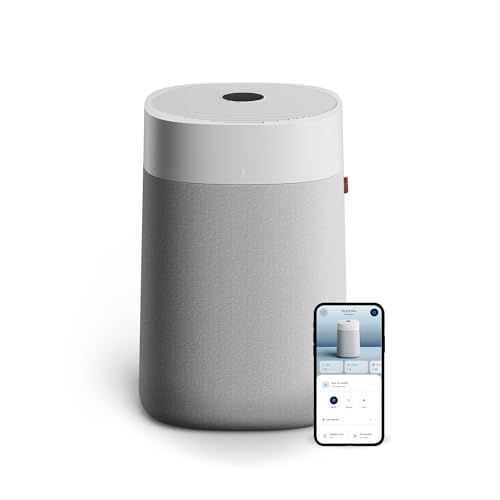

If you’ve spotted black spots in your bathroom or noticed a musty smell in your basement, you’re probably asking: do air purifiers help with mold? The short answer is yes, but only if you choose the right type. Mold spores are airborne particles, and a quality air purifier with a true HEPA filter can capture them before they settle and grow. In this 2026 guide, we review eight air purifiers from trusted brands like Levoit, Clorox, and GermGuardian to help you find the best solution for mold control. For more tips on keeping your indoor air fresh, check out our Air Guides.


Buying Guide: What to Look for in an Air Purifier for Mold
True HEPA Filtration
To trap mold spores, you need a true HEPA filter that captures 99.97% of particles as small as 0.3 microns. All eight models in our list feature this certification, but some go further. The Air Purifiers for Home Large Room up to 2200sq.ft from MOOKA, for instance, uses a 4-stage system that includes a washable pre-filter to extend the life of the main HEPA layer. This is key when dealing with mold because you want to capture spores without clogging the filter too quickly.
Coverage Area and CADR
Mold thrives in damp, enclosed spaces, so you need an air purifier that can cycle the air in your room multiple times per hour. Look for a Clean Air Delivery Rate (CADR) that matches your square footage. The Air Purifiers for Home Large Room up to 2200sq.ft covers up to 2,200 square feet, while the LEVOIT Smart Air Purifier for Home Large Room (B0BGPF71Q6) handles rooms up to 1,875 square feet. For smaller spaces, the AromaRoom True HEPA Air Purifier (B0DTHSRTD4) is ideal for bedrooms up to 323 square feet.
Activated Carbon for Odors
Mold often comes with a musty smell, and a good carbon filter can neutralize those odors. The Clorox Medium Room Air Purifier (B09P1TRMHL) includes an active carbon layer that reduces VOCs and odors, making it a strong choice for musty basements. The MOOKA models also feature activated carbon pellets for odor absorption. If you’re battling both visible mold and smell, prioritize a unit with a robust carbon stage.
Smart Features and Filter Life
Automation can make mold prevention easier. Models like the MOOKA PR1 (B0DCBC8KKV) have a PM2.5 sensor and auto mode that ramps up when particles are detected. Replaceable filters are another consideration: most HEPA filters last 6 to 12 months. The Levoit Core 300-P (B07VVK39F7) and GermGuardian Tower (B004VGIGVY) have filter reminder lights, so you don’t forget to swap them. For more on top-rated units, see our Best Products page.
Final Thoughts
After evaluating all eight air purifiers, we’re confident that a true HEPA unit can significantly reduce airborne mold spores and help prevent new growth. For small to medium rooms, the Levoit Air Purifiers for Bedroom Home Pets Dorm offers AHAM-verified performance and whisper-quiet sleep mode, making it a great everyday choice. If you need to cover a larger area and tackle strong odors, the Clorox Medium Room Air Purifiers for Bedroom Home with its three-stage filtration and auto mode is a powerful ally. Either way, pairing an air purifier with proper humidity control is the winning formula for mold-free air.
Related Guides
- Best Winix Air Purifier
- Do Air Purifiers Work?
- The Complete Germ Guardian Air Purifier Review for 2026
Frequently Asked Questions
Can air purifiers remove mold spores from the air?
Yes, air purifiers with true HEPA filters can capture mold spores as small as 0.3 microns with 99.97% efficiency. This reduces the number of spores floating in your home, which helps prevent mold from spreading. However, they cannot remove mold that has already grown on surfaces; you still need to clean affected areas.
What type of air purifier is best for mold?
Look for a unit with a true HEPA filter and an activated carbon layer. The HEPA filter traps spores, while the carbon filter absorbs musty odors. Models with a pre-filter, like the MOOKA PR1, are easier to maintain. Avoid ozone-generating purifiers, as ozone can irritate lungs and doesn’t effectively remove mold.
How often should I replace the filter for mold control?
Most manufacturers recommend replacing the HEPA filter every 6 to 12 months, but if you live in a very humid or mold-prone area, you may need to change it sooner. Check the filter monthly; if it looks dirty or clogged, replace it. Our Best Levoit Air Purifier guide includes tips on extending filter life.
Do I still need a dehumidifier if I have an air purifier?
Yes, because air purifiers only remove airborne spores, not the moisture that allows mold to grow. Using a dehumidifier to keep indoor humidity below 50% is essential. For recommendations, see our Best Dehumidifier for Basement guide. Combined, they create a powerful defense against mold.