🔥 Black Friday Dehumidifier Deals 2026: picks worth watching →
You step into your basement and are greeted by that familiar musty smell. Damp walls, clammy air, and the constant worry about mold growth. If this sounds like your home, you need a reliable dehumidifier system. This guide reviews the top models for basements in 2026, covering everything from compact units for small spaces to heavy-duty machines for large areas. We’ll help you understand what to look for, so you can make an informed choice and finally enjoy a dry, comfortable basement.
Whether your basement is finished or unfinished, controlling humidity is essential for protecting your investment and your family’s health. The right dehumidifier can prevent structural damage, eliminate odors, and reduce allergens. In this article, we’ve evaluated the best dehumidifier systems for basements, considering factors like capacity, energy efficiency, and ease of use. Let’s dive in and find the perfect solution for your home.




Buying Guide: What to Consider for Your Basement
Capacity and Coverage Area
The most critical factor is the dehumidifier’s capacity, measured in pints per day. A larger basement needs a higher capacity unit. For spaces up to 1,000 square feet, a compact model like the Dehumidifiers for Home, 1000 Sq Ft Dehumidifier might suffice. For larger areas, consider units like the 6000 Sq.Ft. Energy Star Dehumidifier for Basement, which can handle up to 6,000 square feet.
Always match the dehumidifier’s coverage to your basement’s square footage. An undersized unit will run continuously and still fail to control humidity. An oversized unit may cycle too frequently, wasting energy. Check the manufacturer’s specifications for the recommended coverage area and choose accordingly.
Energy Efficiency and Certification
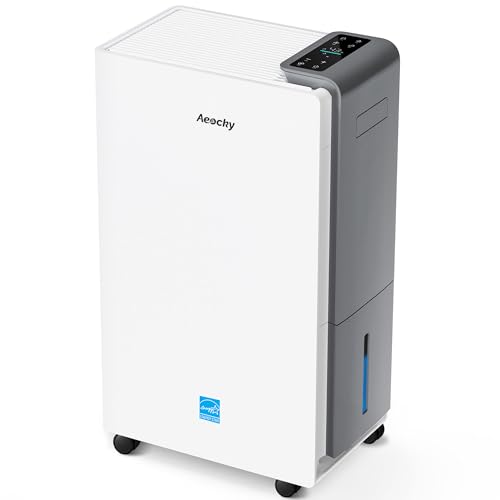
Running a dehumidifier can add to your electricity bill, so energy efficiency is key. Look for models with the ENERGY STAR certification. Some models, like the AEOCKY 5500 Sq.Ft Energy Star Most Efficient 2025, go a step further with the “Most Efficient” designation, saving you up to 50% on energy costs compared to standard models. This can lead to significant savings over time.
When comparing models, check the energy factor (liters per kilowatt-hour). A higher energy factor means more moisture removal per unit of electricity. Investing in an efficient model is better for both the environment and your wallet.
Drainage Options and Convenience
Basement dehumidifiers typically offer two drainage methods: a removable water tank and a continuous drain hose. A large tank, like the 95oz tank on the Dehumidifiers for Home, 1000 Sq Ft Dehumidifier, reduces how often you need to empty it. For truly hands-free operation, choose a model with a drain hose that can be connected to a floor drain or sump pump.
Some models, like the Airecoler 70 Pints Commercial Dehumidifier, even include a built-in pump, allowing you to drain water vertically up to 16 feet. This is ideal for basements without a floor drain. Consider your setup and how much maintenance you’re willing to perform.
Final Thoughts
Choosing the right dehumidifier for your basement depends on your specific needs, from the size of the space to your budget. For most homeowners, the KNKA Energy Star 5500 Sq.Ft Dehumidifier offers an excellent balance of performance, efficiency, and value, making it a top pick for large basements. If you have a smaller area or need a more budget-friendly option, the Dehumidifiers for Home, 1000 Sq Ft Dehumidifier is a solid choice that delivers quiet, effective moisture control. Whichever you choose, you’ll be taking a big step toward a healthier, more comfortable home.
Related Guides
- Top Dehumidifiers for Attic Spaces in 2026
- 7 Top Dehumidifiers for a 1000 Sq Ft Basement in 2026
- Midea 50 Pint Dehumidifier Review
Frequently Asked Questions
What size dehumidifier do I need for my basement?
For a basement up to 1,000 square feet, a compact unit with a capacity of 30-50 pints per day is usually sufficient. For larger basements up to 2,000 square feet, consider a 50-70 pint model. For spaces over 2,000 square feet, you’ll need a heavy-duty unit with 70+ pints per day capacity. Check the product specifications for coverage area to be sure.
Should I get a dehumidifier with a pump?
A pump is beneficial if your basement lacks a floor drain or if you want to drain water into a sink or window well. Models like the Airecoler 70 Pints Commercial Dehumidifier feature a built-in pump that can lift water up to 16 feet vertically, providing flexible drainage options. However, these models are often more expensive and may be noisier.
How often do I need to empty a dehumidifier tank?
The frequency depends on the humidity level and the tank capacity. A dehumidifier with a 70oz tank, like the avylo Dehumidifier for Bedroom,70oz Tank,Auto Shut, may need emptying once a day in very humid conditions. Using a drain hose eliminates this chore entirely, allowing continuous operation. Consider your schedule and convenience when choosing.
Are Energy Star dehumidifiers worth it?
Yes, Energy Star certified dehumidifiers are worth the investment. They use significantly less energy than non-certified models, saving you money on your electricity bills over time. For example, the Waykar 34 Pints 2025 Most Efficient Energy Star uses 50% less energy than traditional models. Additionally, they often come with advanced features like smart controls and better build quality.
For more insights on choosing the right unit for your space, check out our guide on the best dehumidifier for small basement.