
Imagine stepping into your basement only to be greeted by that musty, damp smell that clings to everything. You notice condensation on the walls and a chill in the air that never seems to lift. If this sounds familiar, you’re likely dealing with excess humidity, a common issue in many homes. This guide is designed to help you find the best brand of dehumidifier for a basement, ensuring your space stays dry, comfortable, and free from mold and mildew. We’ve evaluated top contenders to help you make an informed decision for your home.




Buying Guide: What to Look for in a Basement Dehumidifier
Capacity and Coverage
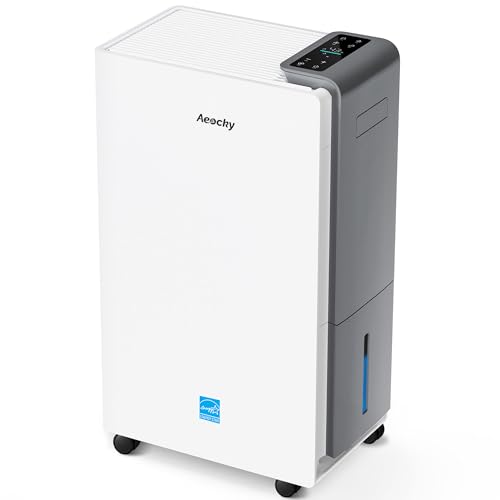
The first thing to consider is how much moisture your basement deals with and its square footage. Dehumidifiers are rated by pints per day, and for large basements, you’ll want a unit that can handle at least 50 pints, with many top models offering 80 pints or more. For example, the Waykar 80 Pints 5000 Sq. Ft 2025 Energy Star is designed for spaces up to 5,000 square feet, making it a robust option for expansive areas. If your basement is smaller, a 50-pint model like the AEOCKY Max 50 Pint/D 3000 Sq.Ft Dehumidifier might be more than sufficient, offering a balance of power and footprint.
Remember, the capacity you need also depends on how damp your basement gets. A mildly humid space may only need a 30-pint unit, but if you have standing water or persistent mustiness, go bigger. Always measure your basement’s square footage and assess the humidity level before making a choice.
Energy Efficiency
Running a dehumidifier 24/7 can add to your energy bills, so choosing an ENERGY STAR certified model is a smart move. These units are designed to use less electricity while delivering the same or better moisture removal. For instance, the AEOCKY 5500 Sq.Ft Energy Star Most Efficient 2025 is one of the rare few to earn the “Most Efficient 2025” title, meaning it’s among the top 2.6% of ENERGY STAR models for efficiency. This can translate to significant savings over time, making it a worthwhile investment for your basement.
When comparing models, look for the ENERGY STAR label and check the energy factor rating. A higher number means better efficiency. Also, consider features like auto-defrost and smart sensors that optimize operation based on real-time conditions, further reducing energy consumption.
Drainage Options and Maintenance
Basements often lack convenient floor drains, so the drainage system is a key factor. Most dehumidifiers come with a removable water tank that requires manual emptying, which can be a hassle if you’re dealing with high humidity. Look for models that offer continuous drainage via a hose. For example, the KNKA Energy Star 5500 Sq.Ft Dehumidifier includes a 6.56 ft drain hose and even supports an optional external tank, giving you flexibility. Similarly, the 80 Pint Dehumidifier for Basement 5500 Sq. Ft. offers both a 1.06-gallon tank and a 3.28 ft hose for continuous operation.
Think about how often you’re willing to empty the tank. If you prefer a set-and-forget solution, prioritize units with robust hose connections and long drain lines. Also, check how easy it is to clean the filter and access the water tank, as regular maintenance is essential for optimal performance.
Smart Features and Noise Level
Modern dehumidifiers come with a range of smart features that enhance convenience. Wi-Fi connectivity, app control, and voice assistant compatibility allow you to adjust settings remotely. The 6000 Sq.Ft. Energy Star Dehumidifier for Basement from boglvr, for instance, works with the Tuya Smart app and Alexa, letting you monitor humidity levels and change modes from your phone. This is particularly useful if you want to check on your basement while away.
Noise is another consideration, especially if your basement is used as a living space or bedroom. Many units operate around 42-45 dB, which is comparable to a quiet conversation. Look for models with a sleep mode or the ability to dim the display, like the AEOCKY Max 50 Pint/D 3000 Sq.Ft Dehumidifier, which is praised for its whisper-quiet operation. Balancing smart features and noise levels will ensure your dehumidifier doesn’t become an annoyance.
For more insights on choosing the right unit, check our best rated basement dehumidifiers guide, which covers additional models and criteria. And if you’re dealing with low temperatures, our guide for low-temperature basements offers specialized recommendations.
Final Thoughts
Choosing the right dehumidifier for your basement comes down to understanding your space and needs. For large basements with serious moisture issues, the Waykar 80 Pints 5000 Sq. Ft 2025 Energy Star is a powerhouse that delivers consistent performance with smart features and energy efficiency. If you prefer a more compact yet powerful option, the AEOCKY Max 50 Pint/D 3000 Sq.Ft Dehumidifier offers excellent value with its quiet operation and small footprint, ideal for tighter spaces. Both are top contenders for the best brand of dehumidifier for a basement, and either will help you reclaim your space from excess moisture.
Related Guides
Frequently Asked Questions
What size dehumidifier do I need for a basement?
The size depends on your basement’s square footage and humidity level. For spaces up to 1,500 sq. ft., a 50-pint unit is usually sufficient. Larger basements up to 5,000 sq. ft. may require an 80-pint model. Always measure your space and consider how damp it gets to choose the right capacity.
How often should I empty the water tank on a basement dehumidifier?
It varies based on humidity and tank size. In a very damp basement, a 1-gallon tank might fill within a day. To avoid frequent emptying, consider a model with a drain hose for continuous drainage, which is a common feature in many of our top picks.
Can I use a dehumidifier in an unfinished basement?
Absolutely. Dehumidifiers are ideal for unfinished basements where concrete walls and floors can release moisture. Look for models with durable construction and features like auto-defrost, which are beneficial in cooler, damp environments. For more tips, see our basement apartment dehumidifier guide.
Are smart dehumidifiers worth it for basements?
Yes, if you want remote monitoring and control. Smart models with Wi-Fi allow you to adjust settings from your phone and integrate with voice assistants, making it easier to maintain optimal humidity levels. They are especially useful if you want to check on your basement while away. In 2026, many top models offer these features without a significant price premium.