

Does your garage feel damp and musty every time you step inside? Excess moisture in a garage can lead to rust on tools, mildew on stored items, and even structural damage over time. Whether you use your garage as a workshop, storage space, or parking area, controlling humidity is essential. In this guide, we have evaluated nine of the best dehumidifiers for garage use in 2026, focusing on capacity, energy efficiency, and durability. We also share practical buying advice to help you choose the right unit for your space. For more tips on managing household humidity, check out our comprehensive dehumidifier resource.




Buying Guide: What to Look for in a Garage Dehumidifier
Capacity and Coverage Area
Garages vary widely in size, so choosing the right capacity is critical. A small two-car garage may only need a 21-pint unit like the 21-Pint Dehumidifier for Basement with Drain Hose, while a larger workshop or three-car garage might require an 80-pint model such as the Waykar 80 Pints 5000 Sq. Ft 2025 Energy Star. Always match the pint rating to your square footage and typical humidity levels. For guidance on sizing, see our air quality guides.
Drainage Options
Manual emptying can be a hassle in a garage where you may not check the unit daily. Look for models with continuous drainage via a hose, like the KNKA Energy Star 5500 Sq.Ft Dehumidifier which includes a 6.56-foot drain hose. For garages with floor drains, this feature lets you run the unit non-stop without worry. If you prefer a tank, ensure it has an auto-shutoff to prevent spills.
Energy Efficiency
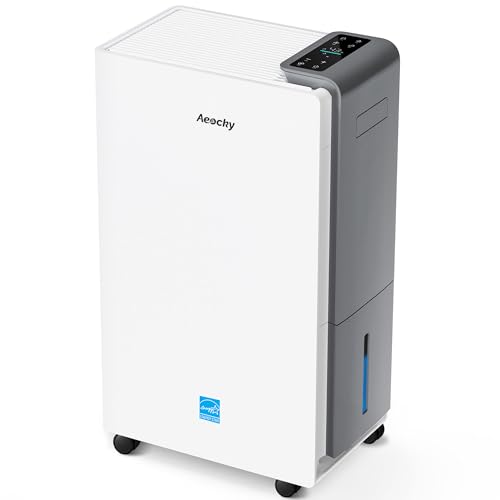
Running a dehumidifier for hours each day can add to your electricity bill. Energy Star certified models, such as the AEOCKY 5000Sq.Ft Energy Star Version 6.0 or the AEOCKY 5500 Sq.Ft Energy Star Most Efficient 2025, use advanced compressors to remove moisture while consuming less power. The “Most Efficient” designation means it ranks in the top tier of Energy Star models, saving you even more over time.
Portability and Build Quality
Garages often have limited floor space and require moving the unit around. Look for models with sturdy casters and ergonomic handles, like the VEAGASO 34-36 Pint/D, 2500 Sq.Ft Dehumidifier. A compact footprint also helps. Additionally, check for features like auto-defrost for cooler garages and washable filters for easy maintenance. For more on low-temperature performance, read our guide to basement dehumidifiers for low temperatures.
Final Thoughts
Choosing the right dehumidifier for your garage comes down to balancing capacity, convenience, and efficiency. For large garages or heavy moisture issues, the Waykar 80 Pints 5000 Sq. Ft 2025 Energy Star offers exceptional coverage and smart humidity control down to 30%, while its quiet operation ensures it won’t disturb your workspace. If you have a smaller garage or a tighter budget, the VEAGASO 34-36 Pint/D, 2500 Sq.Ft Dehumidifier provides reliable performance with flexible drainage and a compact design. Both models are Energy Star certified, so you can run them confidently without worrying about energy waste. For additional advice on drying clothes or tackling damp basements, explore our dehumidifier for drying clothes guide and the Waykar 80 Pints review.
Related Guides
- Best Dehumidifier for Home Use in 2026
- Dehumidifier vs Humidifier
- Black Friday Dehumidifier Deals 2026
- Best Time to Buy a Dehumidifier: A Guide for 2026
Frequently Asked Questions
What size dehumidifier do I need for a garage?
For a standard two-car garage (around 400 to 600 sq. ft.), a 21 to 34 pint unit usually suffices. Larger garages or those with high humidity may require 50 to 80 pint models. Measure your garage’s square footage and consider the climate in your area before deciding.
Can I use a basement dehumidifier in a garage?
Yes, many basement dehumidifiers work well in garages, especially those with continuous drainage and auto-defrost. However, garages often have more dust and temperature swings, so choose a unit with a washable filter and robust build. Our best basement dehumidifier for low temperatures guide offers insights for cooler environments.
How often should I empty a garage dehumidifier?
It depends on the unit’s tank size and the humidity level. A 0.5-gallon tank may need emptying every 8 to 12 hours in a damp garage. For convenience, opt for a model with a drain hose connection so you can set it up for continuous drainage and forget about manual emptying.
Are Energy Star dehumidifiers worth it for a garage?
Absolutely. Energy Star certified models use up to 50% less energy than non-certified units, which can save you hundreds over the unit’s lifetime. For a space like a garage that may run for hours daily, the upfront investment pays off quickly in lower electricity bills.
