

If your basement feels sticky or you notice musty odors creeping into your living spaces, you already know the struggle of excess humidity. A dehumidifier can transform that damp air into a comfortable environment, and Hisense has built a strong reputation for reliable, feature-packed units. In this Hisense dehumidifier review, we evaluate the top models available, from compact 25-pint units to powerful 60-pint machines with built-in pumps. Whether you need a solution for a small bedroom or a large basement, we have you covered. For more on keeping indoor air clean, check out our best air purifiers for home guide.


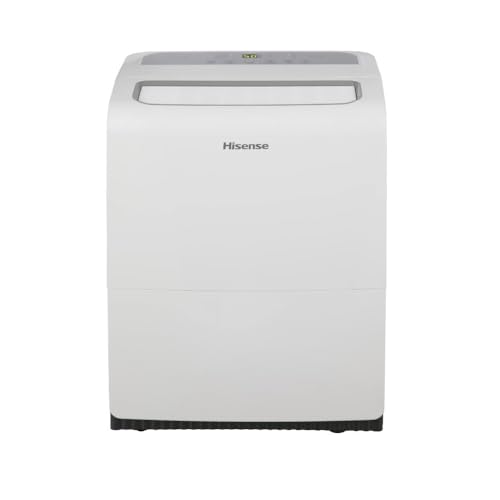


Buying Guide: What to Look for in a Hisense Dehumidifier
Capacity and Coverage Area
Dehumidifiers are rated by the number of pints they remove per day. Hisense offers models from 25 pints up to 60 pints, covering spaces from 1,500 to 4,500 square feet. For a small basement or single room, a 25-pint or 35-pint unit works well. Larger basements or whole-home needs call for a 50-pint or 60-pint model. Always match the capacity to your space to avoid underperformance or wasted energy. For more on basement-specific solutions, visit our basement dehumidifiers category.
Built-in Pump vs. Gravity Drainage
If you plan to drain continuously, a built-in pump is a game changer. Models like the Hisense 50-Pint Lift-Up Portable Dehumidifier with Built-In Pump can push water up to a sink or window, eliminating the need for a floor drain. Gravity drainage models require a hose running downhill. If your basement has no floor drain, a pump model saves you from emptying the bucket frequently. The pump also allows for hands-free operation, a feature many homeowners appreciate.
Noise Level and Fan Speeds
Dehumidifiers run for hours, so noise matters. Hisense models feature multiple fan speeds and low-noise systems. The 25-Pint Compact Portable Dehumidifier operates at just 57 dBA, quiet enough for a bedroom. Higher-capacity units with three speeds let you balance moisture removal with sound. If you plan to use the dehumidifier in a living area or home office, look for models with a low-noise airflow system.
Low-Temperature Operation
Basements and garages often stay cool, even in summer. Many Hisense dehumidifiers operate down to 38°F, making them ideal for unheated spaces. This feature ensures the unit continues to remove moisture efficiently when temperatures drop. If your space stays below 60°F, confirm the model’s low-temperature rating before purchasing. For more on air quality devices, read our best Levoit air purifier review.
Final Thoughts
After evaluating the lineup, our top recommendation for most basements is the Hisense 50-Pint Portable Dehumidifier for its balance of capacity, energy efficiency, and quiet operation. For those who want hands-free drainage and easy bucket emptying, the Hisense 50-Pint Lift-Up Portable Dehumidifier with Built-In Pump is an excellent choice. Both models are ENERGY STAR certified and built to handle persistent humidity. Whichever you choose, you will enjoy a drier, more comfortable home.
Frequently Asked Questions
How often should I empty the bucket on a Hisense dehumidifier?
It depends on the humidity level and model. In a damp basement, a 50-pint unit may fill its bucket every 8 to 12 hours. Most Hisense models have a bucket full indicator and auto shutoff to prevent overflow. For continuous operation, use the drain hose or built-in pump.
Can I use a Hisense dehumidifier in a cold basement?
Yes, many Hisense models are designed to operate at temperatures as low as 38°F. This makes them suitable for unheated basements and garages. Check the product specifications to confirm low-temperature capability before purchasing.
Do Hisense dehumidifiers have a washable filter?
Most Hisense dehumidifiers come with a removable, washable filter. Cleaning it regularly helps maintain performance and airflow. Some models also feature a filter indicator that reminds you when it is time to clean. For more on maintaining air quality, see our best Shark air purifier review.
What is the difference between a gravity drain and a pump dehumidifier?
A gravity drain relies on the hose being lower than the unit to allow water to flow out. A pump dehumidifier can push water upward, making it possible to drain into a sink or window. Pump models are more flexible for basements without floor drains. Hisense offers both types, so choose based on your setup.


