

🔥 Black Friday Air Purifier Deals of 2026: picks worth watching →
If you’re a light sleeper, the hum of a fan or the whir of a motor can be enough to ruin a good night’s rest. But you also want clean air in your bedroom, especially if you suffer from allergies or asthma. The solution is a quiet air purifier, one that runs so softly you’ll forget it’s there. In this guide, we’ve evaluated the best quiet air purifier models for 2026, focusing on models that combine whisper-quiet operation with powerful HEPA filtration. We’ve considered a range of room sizes and budgets to help you find the perfect match for your home.





Buying Guide: What to Look for in a Quiet Air Purifier
When you’re shopping for a quiet air purifier, you need to look beyond the decibel rating. Here are the key factors we recommend you consider before making a purchase.
Noise Level (Decibels)
The most obvious factor is the noise level, measured in decibels (dB). A rating of 20 dB is virtually silent, like a whisper, while 40 dB is comparable to a quiet library. For a bedroom, you’ll want a purifier that operates at or below 35 dB on its lowest setting. Many of our top picks feature a dedicated sleep mode that reduces the fan speed and noise to a barely audible hum.
Keep in mind that noise levels can vary depending on the fan speed. A purifier might be quiet on its lowest setting but become noticeably louder on higher speeds. We recommend checking the noise ratings for each speed, especially if you plan to run it on a higher setting during the day. Our guide on the quietest HEPA air purifier provides more details on the quietest models we’ve found.
Filtration Efficiency (HEPA vs. Others)
A HEPA filter is the gold standard for capturing airborne particles. True HEPA filters are certified to capture 99.97% of particles as small as 0.3 microns, which includes dust, pollen, pet dander, and even some bacteria. Some purifiers use a pre-filter to capture larger particles, extending the life of the main HEPA filter. For allergy sufferers, a HEPA filter is a must.
Beyond HEPA, consider a purifier with an activated carbon filter. This helps reduce odors, smoke, and volatile organic compounds (VOCs) that HEPA filters can’t capture. If you’re dealing with smoke or strong smells, a carbon filter is a valuable addition. For more on tackling dust, check out our best air purifier for a dusty house guide.
Room Size Coverage (CADR)
The Clean Air Delivery Rate (CADR) measures how quickly an air purifier can filter the air in a given room size. A higher CADR means faster purification. For a quiet air purifier, you’ll want a model that’s appropriately sized for your room. If you have a large open-plan living area, you’ll need a higher CADR than for a small bedroom.
Many manufacturers list the recommended room size based on a certain number of air changes per hour. For example, a purifier rated for 500 square feet might be suitable for a large bedroom or living room. Always check the CADR for the specific pollutants you’re concerned about, such as dust, pollen, and smoke. Our guide to the best air purifier and humidifier combo can help if you’re also looking to add moisture to the air.
Smart Features and Auto Mode
Modern air purifiers often come with smart features like air quality sensors, auto mode, and app connectivity. An air quality sensor detects changes in particle levels and automatically adjusts the fan speed. This is not only convenient but also helps save energy. Auto mode is especially useful for a quiet air purifier, as it will only ramp up the fan when needed, keeping noise levels low most of the time.
Some models also offer a sleep mode that dims the lights and reduces the fan to its quietest setting. If you’re sensitive to light, look for a purifier with a light sensor or the ability to turn off the display. For a comparison of a top brand, read our Blueair vs. Winix article.
Final Thoughts
Finding the best quiet air purifier for your home comes down to balancing noise, performance, and features. For a bedroom or nursery, the COWAY Airmega Mighty2 Air Purifier is an excellent choice, with its sleep mode that operates at as low as 19 dB, ensuring undisturbed rest. If you need a larger unit for an open-plan space and value smart features, the BLUEAIR Air Purifiers for Home Large Room up offers powerful purification with app control and quiet operation, making it a versatile pick. Both models deliver the quiet performance you need without compromising on air quality.
Related Guides
- Best Blueair Filters for Clean Air in 2026
- Shark NeverChange Air Purifier Max Review
- PuroAir 240 HEPA Review
Frequently Asked Questions
How quiet is a quiet air purifier?
Quiet air purifiers typically operate at noise levels between 20 and 40 decibels. A model with a sleep mode can go as low as 19 dB, which is barely audible, making it perfect for a bedroom or nursery. Always check the noise rating on the lowest setting to ensure it meets your comfort level.
Can I sleep with a quiet air purifier on?
Absolutely. In fact, many quiet air purifiers are designed specifically for nighttime use. With sleep mode, the fan slows down and the lights dim, ensuring minimal disturbance. The white noise from the fan can even help some people sleep better by masking other sounds.
What is the best quiet air purifier for a large room?
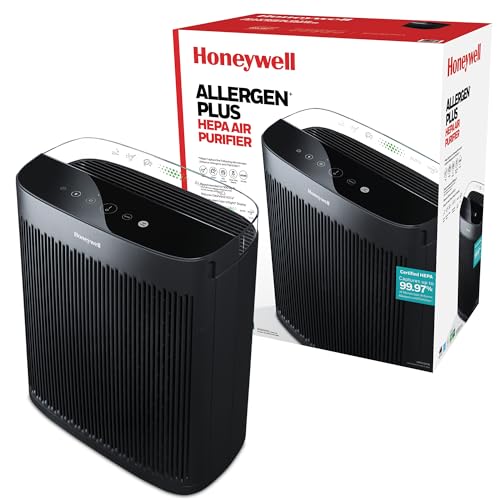
For large rooms, look for a purifier with a high CADR and a quiet operation. Models like the Honeywell HEPA Air Purifier for Home or the Levoit Smart Air Purifiers for Home Large Room are excellent options, offering powerful purification while maintaining a low noise profile on their lowest settings. Our review of PuroAir vs. Levoit can help you compare top performers.
Are quiet air purifiers effective?
Yes, quiet air purifiers are just as effective as louder models. The noise level is not related to cleaning performance. They use the same HEPA and carbon filters to remove contaminants. The key is to choose a model with a CADR that matches your room size, and to run it on a higher speed when you’re not sleeping to maximize air changes.


