
Indoor air quality can be a silent threat, especially during allergy season or when wildfire smoke drifts into your neighborhood. You might notice lingering odors, dust settling on surfaces, or that telltale tickle in your throat. Honeywell air purifiers have long been a trusted solution, with HEPA filtration that captures microscopic particles and advanced sensors that adjust cleaning automatically. This guide reviews the best Honeywell air purifiers for 2026, covering compact options for small rooms and robust units for whole-home purification. If you are considering other brands, our guide to best Levoit air purifiers offers additional insights.
Whether you are a parent wanting cleaner air for your child’s nursery, a pet owner battling dander, or someone living in a high-smoke area, there is a Honeywell model suited to your space. We evaluated each product based on filtration layers, room coverage, noise levels, and smart features to bring you a concise, actionable comparison. Read on to find your perfect match.




Buying Guide: What to Look for in a Honeywell Air Purifier
Room Size and CADR
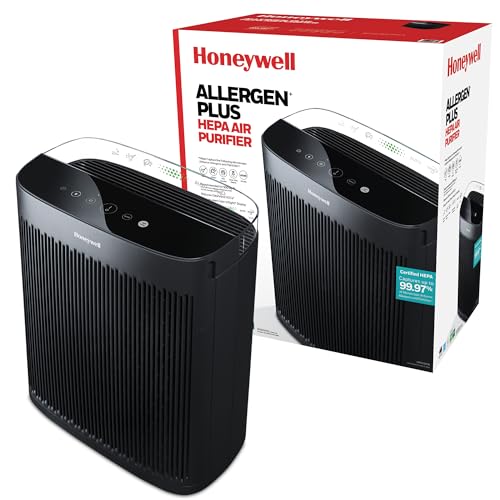
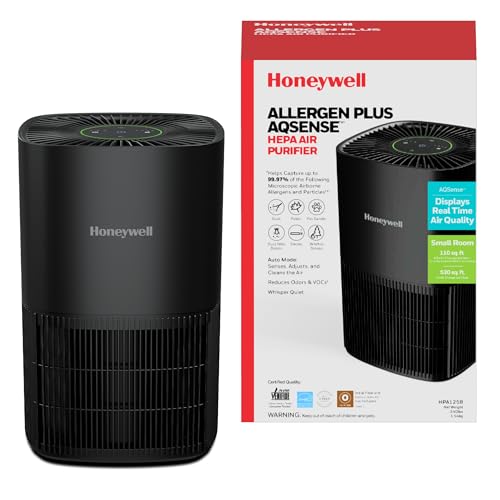
The most critical factor is matching the purifier to your room’s square footage. Honeywell models are AHAM Verifide, meaning their Clean Air Delivery Rate (CADR) is independently confirmed. For a small bedroom or office, a compact unit like the Honeywell Allergen Plus Compact covers up to 530 sq. ft. (at 1 air change per hour). For open-concept living areas, large models like the Honeywell HEPA Air Purifier for Home (HPA5300B) can handle rooms up to 2,423 sq. ft. when run continuously. Always check the recommended room size for your specific needs. For a broader look at room coverage, see our best air purifiers for home.
Filtration Layers
True HEPA filtration is the gold standard, capturing 99.97% of particles as small as 0.3 microns. Many Honeywell models add a carbon pre-filter to reduce household odors, VOCs, and smoke. The Allergen Plus 4-in-1 units go a step further with a fourth layer that provides extra protection against microscopic irritants. If you have pets or smokers, look for models with a washable pre-filter to trap hair and larger debris, extending the life of the main filter. For more on multi-stage filtration, check our best winix air purifier for an alternative approach.
Noise Levels and Sleep Mode
If you plan to use the purifier in a bedroom or nursery, noise is a major consideration. Honeywell’s compact models feature a Sleep Mode that operates as low as 20.81 dBA, which is quieter than a whisper. Larger units like the PowerPlus series run at higher decibels on Turbo mode, but still offer a low setting that is unobtrusive. Dimmable lights and timer options (2, 4, 8 hours) further enhance nighttime comfort.
Smart Features and Auto Mode
Many newer Honeywell purifiers include AQSense Auto Mode with a built-in air quality sensor. The unit continuously monitors the air, displays a color-coded indicator (Green, Yellow, Red), and adjusts fan speed automatically. This hands-off convenience ensures your room stays clean without manual tweaking. Some models also include a child lock and a filter change reminder, making maintenance effortless.
Final Thoughts
For most households, the Honeywell HEPA Air Purifier for Home strikes an ideal balance of coverage, filtration power, and smart features, making it a top choice for large living spaces. If you need a compact solution for a small bedroom or dorm, the Honeywell Allergen Plus Compact Small Room HEPA delivers whisper-quiet operation and effective 360-degree cleaning at an accessible price point. Whichever model you choose, you are investing in cleaner, healthier indoor air.
Related Guides
Frequently Asked Questions
Are Honeywell air purifiers good for allergies?
Yes, Honeywell air purifiers with True HEPA filters capture up to 99.97% of airborne allergens such as dust, pollen, pet dander, and mold spores. Models like the Allergen Plus series are specifically designed to reduce allergy triggers and are AHAM Verifide for performance.
How often should I replace the filter in a Honeywell air purifier?
Most Honeywell HEPA filters need replacement every 6 to 12 months depending on usage and air quality. The unit includes a filter change indicator light to remind you. Always use genuine Honeywell replacement filters for optimal performance.
Do Honeywell air purifiers remove smoke and odors?
Many Honeywell purifiers combine a HEPA filter with an activated carbon pre-filter that helps reduce smoke, cooking odors, and VOCs. The Allergen Plus 4-in-1 and HPA5300B series are particularly effective for wildfire smoke and household smells.
What size room does a Honeywell air purifier cover?
Room coverage varies by model. Compact units clean spaces up to 530 sq. ft. (at 1 air change per hour), while large models like the HPA5300B can handle rooms up to 2,423 sq. ft. in the same time. For best results, choose a model that matches your room’s square footage and desired air changes per hour.