🔥 Black Friday Air Purifier Deals of 2026: picks worth watching →
Waking up with a stuffy nose, itchy eyes, or a scratchy throat? You might be sharing your bed with millions of microscopic dust mites. These tiny creatures thrive in warm, humid environments, feeding on dead skin cells. While you can’t see them, their waste particles are a major trigger for allergy and asthma symptoms. The most effective way to combat them is by using a HEPA air purifier designed to capture these allergens from the air. In this guide, we’ve reviewed the top models to help you find the best HEPA air purifier for dust mites for your home.
We’ve spent hours researching and analyzing the leading air purifiers on the market, focusing on their filtration efficiency, room coverage, and smart features. Whether you need a compact unit for a bedroom or a powerful machine for a large living area, our picks cover a range of needs. For a broader look at home purification, check out our best HEPA air purifier for home guide as well.






Buying Guide: What to Look For in a Dust Mite Air Purifier
Not all air purifiers are created equal, especially when it comes to tackling dust mites. Here are the key factors to consider before making your purchase.
True HEPA Filtration is Non-Negotiable
Dust mite debris and their allergens are extremely small, often less than 2.5 microns. A True HEPA filter is designed to capture at least 99.97% of particles that are 0.3 microns in size, making it the gold standard for allergy sufferers. Look for the term “True HEPA” on the product specification, and avoid cheaper units that use “HEPA-like” filters, which are less effective.
Several models in our list, like the COWAY Air Purifier for Home Up to 1,748ft², feature a four-stage filtration system with a True HEPA filter, ensuring that dust mite allergens are effectively trapped.
Consider the Coverage Area and CADR Rating
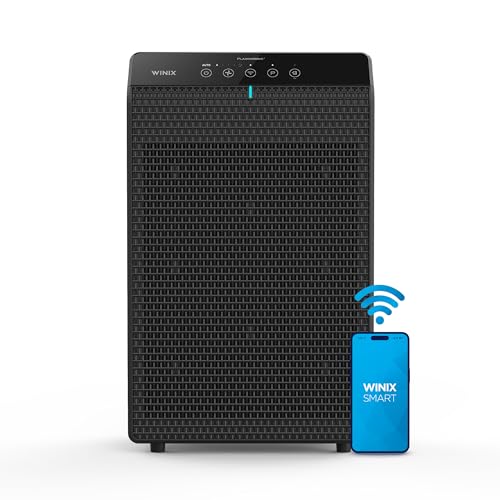
To be effective, your air purifier must be appropriately sized for the room where you’ll use it. The Clean Air Delivery Rate (CADR) tells you how quickly the purifier can clean the air. A higher CADR means faster purification. Also, check the recommended room size, usually expressed in square feet. For a bedroom, a model like the Levoit Air Purifier for Home Pets Hair Allergens is a great fit, while larger spaces may need a high-capacity unit like the WINIX 5520.
For apartments and smaller homes, you might find our best air purifier for apartment roundup helpful, as it focuses on space-saving yet powerful options.
Smart Features and Noise Levels Matter
Modern air purifiers come with a range of conveniences. An air quality monitor and auto mode are incredibly useful, as they automatically adjust the fan speed based on the detected pollution level. A sleep mode is also vital for bedroom use, ensuring quiet operation, often below 30dB, so you can sleep undisturbed. Some models, like the Levoit Air Purifier for Home Pets Bedroom Dorm, even offer smart connectivity and voice control for added convenience.
Filter replacement indicators are another handy feature, reminding you when to swap out the filter to maintain peak performance. This is crucial for long-term effectiveness against dust mites.
Final Thoughts
Choosing the right HEPA air purifier can significantly reduce dust mite allergens in your home, leading to better sleep and fewer allergy symptoms. For most bedrooms, the Levoit Air Purifier for Home Pets Hair Allergens offers an excellent balance of performance, quiet operation, and value. If you need to cover a larger living area or an open-plan space, the COWAY Air Purifier for Home Up to 1,748ft² is a top-tier choice with its impressive coverage and real-time air quality monitoring. Both are outstanding investments in your health and comfort.
Related Guides
Frequently Asked Questions
How do HEPA air purifiers remove dust mites?
HEPA air purifiers work by drawing in air and forcing it through a fine mesh filter that traps dust mites, their feces, and other allergens. While they don’t kill dust mites, they effectively remove the allergenic particles from the air, providing relief. For a deeper dive into allergen control, see our guide on HEPA air purifiers for pet allergies.
Where should I place my air purifier for dust mites?
Place the air purifier in the room where you spend the most time, ideally the bedroom. Keep it at least 3 feet away from walls and furniture to ensure proper airflow. For optimal results, run it continuously, especially during the day when you’re not in the room.
How often should I replace the HEPA filter?
Most manufacturers recommend replacing the HEPA filter every 6 to 12 months, depending on usage and air quality. Some models have filter replacement indicators that alert you when it’s time. Regular replacement is essential to maintain peak filtration efficiency, especially in 2026.
Can an air purifier help with dust mite allergies?
Yes, absolutely. By continuously filtering the air, a HEPA air purifier can significantly reduce airborne dust mite allergens. This can lead to a noticeable decrease in sneezing, coughing, and itchy eyes. For comprehensive allergy relief, also consider washing bedding in hot water and using allergen-proof covers. If you also face mold issues, check out our best HEPA air purifier for mold recommendations.