🔥 Black Friday Humidifier Deals 2026: picks worth watching →
Waking up with a scratchy throat, dry skin, or static-filled hair is a familiar winter struggle. You need moisture in the air, but the aisle of humidifiers is overwhelming. Each type promises relief, yet they differ in how they work, the maintenance they demand, and the rooms they serve best. This guide cuts through the noise to help you identify the best type of room humidifier for your specific needs, whether you’re battling congestion in a nursery or protecting wooden furniture in a large living area. We’ll break down the key differences, highlight top performers, and answer the questions that matter most.
Our focus is on large room humidifiers, but the principles apply to any space. We’ve evaluated dozens of models, considering output, runtime, noise levels, and ease of cleaning. For a broader look at what’s available, check out our large room humidifiers reviews for detailed ratings and comparisons.



Buying Guide: How to Choose the Right Humidifier Type
Before you click “add to cart,” consider these four critical factors. They determine whether a humidifier becomes a beloved appliance or a dusty paperweight.
1. Coverage Area and Mist Output
Match the humidifier’s capacity to your room’s square footage. A small bedroom may only need a 3L tank, while an open-concept living area demands a 6L or 8L model. Look for the stated coverage in square feet and the mist output in milliliters per hour. For a large living room, you’ll want at least 300 mL/h to make a noticeable difference. The best humidifier for a large living room typically boasts a higher output and a larger tank to avoid constant refills.
Consider the room’s layout. Open floor plans require more power than closed-off bedrooms. Also, think about ceiling height; taller rooms need a more powerful unit to distribute moisture effectively.
2. Noise Level and Sleep Features
For a bedroom or nursery, the noise level is non-negotiable. Ultrasonic models are generally quieter than evaporative ones, but even among ultrasonic, there’s variation. Look for a sleep mode that dims or turns off display lights and operates at a whisper-quiet decibel level, ideally below 30 dB. Some models, like the DREO 3L, offer ambient lighting that can be turned off, which is a nice touch for light-sensitive sleepers. If you’re a light sleeper, prioritize a model with a dedicated sleep mode and a low noise rating.
Also, check if the humidifier has a timer function, so you can set it to run for a few hours and then shut off automatically.
3. Ease of Cleaning and Maintenance
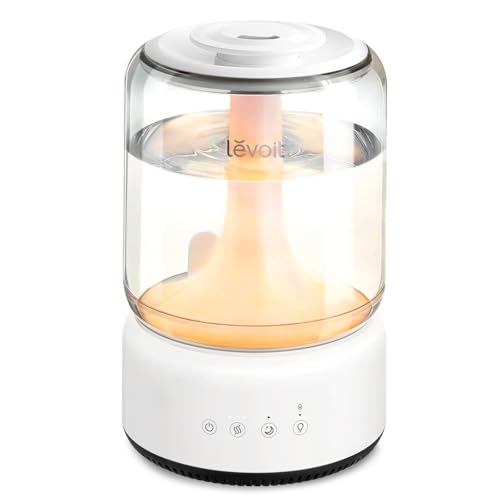
Humidifiers can become breeding grounds for mold and bacteria if not cleaned regularly. Top-fill designs make refilling and wiping down the interior a breeze. Detachable tanks that open fully for scrubbing are a plus. Some models, like the Levoit Evaporative, have dishwasher-safe parts and a self-cleaning mode, which significantly reduces upkeep. Evaporative humidifiers use a wick filter that needs periodic washing or replacement, while ultrasonic models are filter-free but may require descaling to manage mineral buildup. Choose a model whose maintenance routine you can realistically stick with.
For a hassle-free experience, look for features like a wide-mouth opening or a fully removable tank. These small details save you time and frustration.
4. Smart Features and Humidity Control
Do you want a humidifier that works on its own? Models with a built-in humidistat automatically adjust the mist output to maintain your desired humidity level, preventing over-humidification. Some even connect to Wi-Fi and can be controlled via a smartphone app or voice assistant. If you’re tech-savvy, a smart humidifier like the Levoit Superior Studio offers app control and scheduling. For others, a simple knob or button control is perfectly adequate. Consider how much automation you need in your daily life.
Also, think about additional features like an essential oil diffuser tray or a night light. These can add to the ambiance but aren’t essential for core functionality.
Final Thoughts
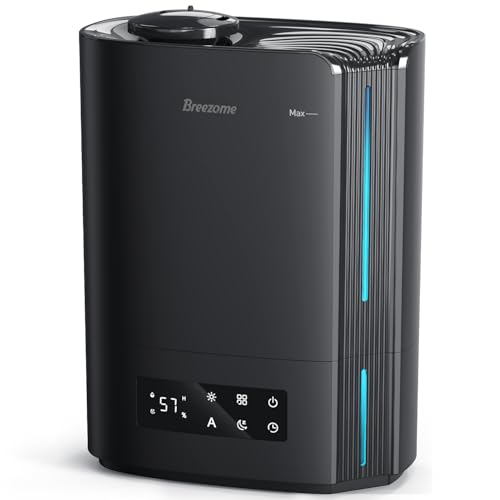
Choosing the best type of room humidifier ultimately comes down to your room size, noise tolerance, and willingness to clean. For a powerful, feature-rich option that excels in large spaces, the BREEZOME 6L Humidifier for Bedroom Large Room offers a generous tank, smart humidistat, and quiet operation, making it a versatile all-rounder. If you prefer a more natural, filter-based approach that eliminates white dust, the Levoit Evaporative Humidifiers for Bedroom, 19dB is a premium choice with self-cleaning and dishwasher-safe components, ideal for those who prioritize air purity and low maintenance. Both represent the best in their categories, so let your specific needs guide your final decision.
Related Guides
Frequently Asked Questions
What is the best type of room humidifier for a large bedroom?
For a large bedroom, an ultrasonic humidifier with a 4L to 6L tank is ideal. It operates quietly, which is crucial for sleep, and the larger capacity means you won’t have to refill it every night. Look for models with a sleep mode and a humidistat to maintain optimal comfort. The Levoit OasisMist 1000S is a great example of a smart, large-capacity option.
Are evaporative humidifiers better than ultrasonic ones?
It depends on your priorities. Evaporative humidifiers use a wick filter to naturally evaporate water, which prevents white dust from minerals in tap water. They are also self-regulating, as evaporation slows down as humidity rises. Ultrasonic models are quieter and more energy-efficient, but they can leave a fine white dust if you use hard tap water. For allergy sufferers, an evaporative model might be the better choice.
How often should I clean my room humidifier?
Ideally, you should empty and dry the tank daily to prevent mold and bacteria growth. A thorough cleaning with vinegar or a mild disinfectant should be done weekly. Some models, like the Levoit Superior Studio, have a self-cleaning mode that automates this process, making maintenance easier. Always follow the manufacturer’s instructions for the best results.
Can I use tap water in my humidifier?
You can, but it may cause mineral buildup (white dust) in ultrasonic models. Using distilled or demineralized water is recommended to prevent this. Evaporative humidifiers are more tolerant of tap water because the filter traps minerals. In 2026, many new models are designed to work with tap water, but using distilled water will always extend the life of your device.