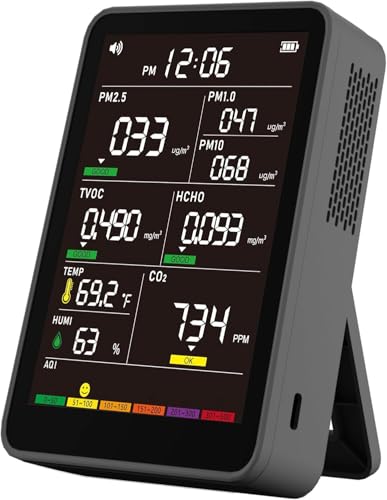

You wake up with a headache, your eyes feel gritty, and you can’t shake that lingering stuffy feeling. The culprit might be hiding in your own home: poor indoor air quality. Whether it’s from cooking fumes, cleaning products, or just a tightly sealed house, the air you breathe indoors can be up to five times more polluted than outdoor air. That’s where a reliable air quality monitor becomes your best defense.
In this guide, we’ve evaluated the top air quality monitors available on the market, focusing on accuracy, ease of use, and the range of pollutants they detect. Whether you’re a health-conscious parent, a remote worker, or someone managing allergies, we’ve got a pick for you. Let’s dive into our curated list of the best air quality monitor website options for 2026.
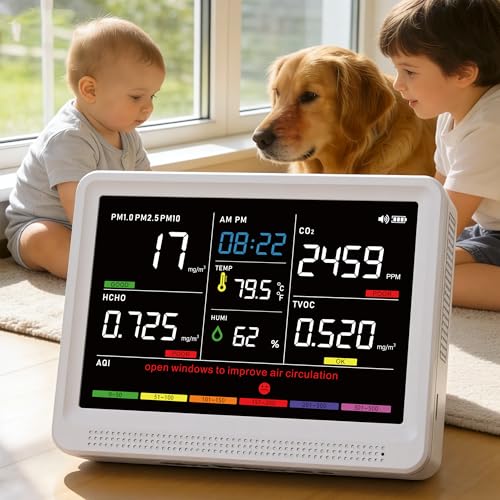


Buying Guide: How to Choose the Right Air Quality Monitor
With so many options, it’s easy to feel overwhelmed. Here are the key factors we recommend you consider before making a purchase.
Sensor Accuracy and Range
The whole point of a monitor is to give you reliable data. Look for devices with high-precision sensors, like those using NDIR (non-dispersive infrared) technology for CO2 detection or laser-based sensors for particulate matter. The best monitors offer accuracy down to 0.001 units, catching even the slightest changes in your air.
Consider the range of pollutants you want to track. A basic monitor might just measure temperature and humidity, while a comprehensive one will also detect PM2.5, VOCs, formaldehyde, and radon. For a deeper dive into VOC detection, check out our best VOC air quality monitor picks.
Display and User Interface
You want a monitor that’s easy to read at a glance. A large, high-definition screen with color-coded alerts can make all the difference. Some models feature a 5.5-inch or even 7-inch display, showing all your data without needing to navigate menus. Others offer a simple LED indicator that changes color based on air quality.
If you plan to place it in a bedroom, a quiet mode or a dimmable screen is a nice touch. For more insights on different types of monitors, visit our air quality monitor guide.
Connectivity and Smart Features
Modern monitors often come with Wi-Fi or Bluetooth, allowing you to check your air quality from your smartphone. Some integrate with smart home ecosystems like Alexa or Google Home, enabling you to automate air purifiers or fans when pollutant levels rise. If you’re tech-savvy, look for app support that offers historical data, trends, and alerts.
For a comprehensive look at how monitors can help in various settings, including warehouses, see our warehouse air quality monitor recommendations.
Power and Portability
Consider whether you need a battery-powered monitor for portability or a plug-in unit for continuous monitoring. Battery life varies significantly, from a few hours to several weeks. If you want to move the monitor from room to room, a lightweight, rechargeable model with a USB-C charging port is ideal.
For home use, a monitor with a long battery life or AC adapter is convenient. If you’re also looking to control humidity, pairing your monitor with a good humidifier can help. Check out our top humidifiers under $50 for budget-friendly options.
Final Thoughts
Choosing the right air quality monitor is a personal decision that depends on your specific needs and budget. For those who want a comprehensive, professional-grade solution, the Airthings 2960 View is our top pick, offering radon detection and a five-year warranty. If you’re looking for a more budget-friendly option that still covers all the essentials, the Amazon Smart Air Quality Monitor is a fantastic choice, especially if you’re already in the Alexa ecosystem. Whichever you choose, you’ll be taking a proactive step toward healthier living.
Related Guides
- Best Air Quality Monitors for 3D Printing in 2026
- Cheap Ambient Air Quality Monitors
- Airthings View Plus Review
- Best Portable Air Quality Monitor Picks for 2026
Frequently Asked Questions
What is the best air quality monitor for home use?
The best air quality monitor for home use depends on your specific needs. For most households, a monitor that tracks CO2, PM2.5, and VOCs is essential. The Airthings 2960 View is a top choice for its radon detection and smart features, while the Amazon Smart Air Quality Monitor is great for Alexa users. For a budget-friendly option, the 16 in 1 Air Quality Monitor Indoor High-Precision offers excellent value.
How often should I check my air quality monitor?
It’s a good idea to check your air quality monitor daily, especially if you have allergies or respiratory issues. Many monitors provide real-time data, so you can glance at the display or app anytime. Some models offer alerts when pollutant levels rise, so you can take action immediately. In 2026, most smart monitors allow you to review historical data, helping you identify patterns over time.
Do air quality monitors need calibration?
Most modern air quality monitors are factory-calibrated and require minimal maintenance. However, over time, sensors may drift, so it’s a good idea to check the manufacturer’s recommendations. Some devices offer self-calibration features, while others may require manual calibration. For accurate readings, it’s important to keep the sensors clean and avoid exposing them to strong odors or fumes.
Can an air quality monitor help with allergies?
Yes, an air quality monitor can help you identify allergens like pollen, dust, and pet dander by measuring particulate matter (PM2.5). By knowing when levels are high, you can take steps to improve your indoor air, such as using an air purifier or increasing ventilation. For more tips on managing indoor air quality, check out our air quality guides.