

Have you ever walked into a room and felt instantly tired or stuffy, without knowing why? The air we breathe inside our homes can be filled with invisible pollutants like carbon dioxide, volatile organic compounds (VOCs), and fine dust particles that affect our sleep, focus, and long-term health. That’s why the best air quality monitor for home is no longer a luxury, it’s a necessity for anyone who cares about their well-being.
In this guide, we’ve evaluated eight top-rated air quality monitors for 2026, from budget-friendly models to professional-grade devices. Whether you’re a parent worried about formaldehyde from new furniture, a remote worker wanting to optimize your home office, or someone with allergies seeking cleaner air, we have a pick for you. For more insights on maintaining healthy indoor environments, check out our guide to indoor and outdoor air quality monitors.


Buying Guide: What to Look for in the Best Air Quality Monitor for Home
Sensor Accuracy and Range
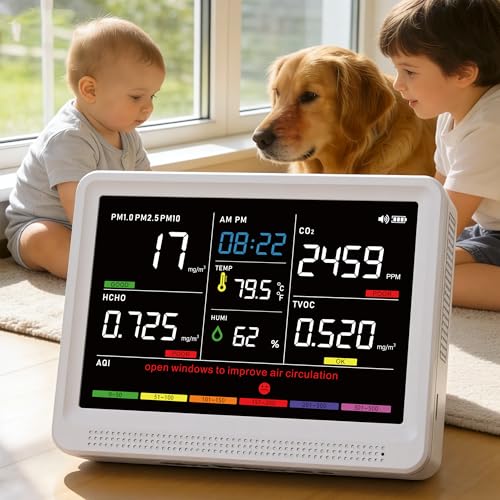
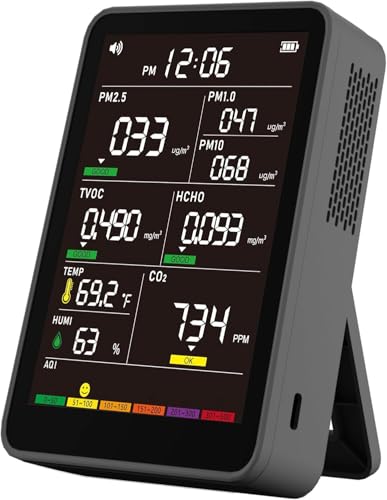
The heart of any air quality monitor is its sensor array. Look for devices that use advanced technologies like NDIR (nondispersive infrared) for CO2 measurements and laser particle counters for PM2.5 and PM10. High-precision sensors with accuracy down to 0.001 units, like those found in the YNAK models, capture even the smallest changes in air composition.
A monitor that can simultaneously track CO2, PM2.5, formaldehyde (HCHO), TVOCs, temperature, and humidity gives you a complete picture of your indoor environment. This is especially useful if you have asthma, allergies, or live in an area with high outdoor pollution that seeps indoors. For more on choosing the right filters to complement your monitor, see our recommendations for Levoit filters.
Display and User Experience
You want a monitor that gives you instant feedback at a glance. Large, high-definition color screens with adjustable brightness levels make it easy to read values from across the room. Models with color-coded AQI indicators (green for good, yellow for moderate, red for poor) are intuitive for the whole family.
Also consider the ease of setup and everyday use. Touchscreen controls, simple button layouts, and features like mute alarms for nighttime make the device pleasant to use. The best monitors also offer smart app connectivity for remote monitoring and historical data analysis, allowing you to spot trends over days or weeks.
Power Source and Portability
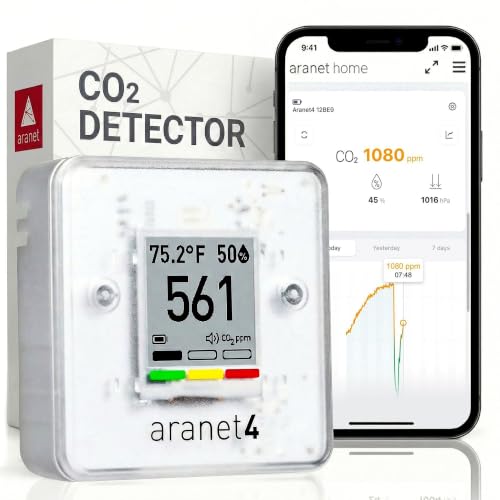
Decide whether you need a device that sits on a shelf or one you can carry from room to room. Rechargeable battery-powered monitors with USB-C charging offer flexibility for use in bedrooms, living rooms, offices, and even in the car or on camping trips. Look for battery life of at least 6 to 10 hours for daily convenience.
If you prefer wire-free placement, choose a model with long battery life or a low-power e-ink display that lasts years. For stationary use in a nursery or home office, a plug-in unit with a wall adapter may be more practical. For more ideas on creating a healthier home overall, explore our best cold mist humidifier reviews to complement your air quality efforts.
Final Thoughts
Choosing the best air quality monitor for home ultimately comes down to your specific needs and budget. If you want an all-in-one powerhouse with a large display and multiple sensors, the 16 in 1 Air Quality Monitor Indoor High-Precision from YNAK offers exceptional value for its accuracy and features. For those who prioritize a smart home ecosystem and seamless Alexa integration, the Amazon Smart Air Quality Monitor is an affordable and reliable choice that pairs perfectly with other Echo devices. Whichever you pick, you will breathe easier knowing you have real-time data to keep your home safe and healthy.
Related Guides
- Best Air Quality Monitor for 2026
- Airthings View Plus Review
- Best Buy Air Quality Monitor: Top Picks for Cleaner Indoor Air
Frequently Asked Questions
What pollutants should an air quality monitor measure?
For comprehensive home monitoring, look for a device that tracks carbon dioxide (CO2), particulate matter (PM2.5 and PM10), volatile organic compounds (TVOCs), and formaldehyde (HCHO). Temperature and humidity are also important for overall comfort. The best air quality monitors for home in 2026 cover at least five of these parameters.
Where should I place an air quality monitor in my home?
Place the monitor in a central living area or the room where you spend the most time, such as a bedroom or home office. Avoid placing it near windows, doors, or direct sunlight, as these can skew readings. For accurate results, keep it at least 3 feet away from air vents and at breathing height (about 3 to 5 feet above the floor).
How often should I calibrate or replace the sensors?
Most modern air quality monitors come pre-calibrated from the factory and maintain accuracy for several years. Some models, like the Airthings 2960 View, use long-life sensors that need no user calibration. However, if you notice readings that seem off after 2 to 3 years, it may be time to replace the device. Always follow the manufacturer’s recommendations to ensure ongoing accuracy.
Can an air quality monitor help with allergies or asthma?
Absolutely. By monitoring PM2.5 and PM10 particles, as well as VOCs from cleaning products or mold, an air quality monitor can alert you to triggers that worsen allergy or asthma symptoms. When combined with an air purifier and good ventilation, it becomes a powerful tool for managing respiratory health. For more on air purification, see our review of the Levoit Tower Fan for improving air circulation.