

🔥 Black Friday Air Purifier Deals of 2026: picks worth watching →
You want cleaner air in your home, but choosing between Blueair and Dyson can feel overwhelming. Both brands offer advanced HEPA filtration, smart features, and sleek designs. Yet they take very different approaches to air purification. This guide will help you understand the key differences so you can pick the right model for your space and lifestyle.
Whether you need whole-room purification, heating and cooling, or just a quiet humidifier, we have you covered. We have evaluated each product based on real-world performance and user feedback. For a deeper look at compact options, check out our blueair mini max review.




Buying Guide
Filtration Technology
Dyson uses fully sealed HEPA H13 filtration combined with activated carbon to capture 99.97% of particles as small as 0.3 microns. Some models also remove gases and destroy formaldehyde. Blueair focuses on evaporative humidification with antimicrobial wicks that trap minerals and pollutants without releasing white dust. If you prioritize air purification alone, Dyson’s multi-stage system is hard to beat. For humidification with clean moisture, Blueair’s InvisibleMist technology is a standout.
Smart Features and Control
Both brands offer app and voice control. Dyson’s MyDyson app provides real-time air quality reports, schedules, and remote monitoring. Blueair’s app allows you to adjust humidity levels, set AutoHydrate mode, and control mood lighting. Dyson models like the Purifier Hot+Cool HP2 De-NOx also include heating and cooling, making them year-round solutions. For a comparison of other smart purifiers, see our levoit vs shark air purifier.
Noise Levels and Nighttime Use
Blueair humidifiers operate as quietly as 20 dB, ideal for bedrooms and nurseries. They also feature soft mood lighting to create a calming sleep environment. Dyson purifiers are generally louder but still suitable for bedrooms, especially on lower fan speeds. If silence is your priority, Blueair’s DreamWell models are designed for nighttime rituals.
Coverage and Airflow
Dyson’s Air Multiplier technology projects over 76 gallons per second of airflow, cooling or heating a whole room evenly. It oscillates up to 350 degrees for broad coverage. Blueair humidifiers are designed for specific room sizes, from small bedrooms to large living areas. For large spaces, the 7.6L DreamWell 2.0 provides up to 72 hours of runtime. For more on large-room options, see our best large room air purifier guide.
Final Thoughts
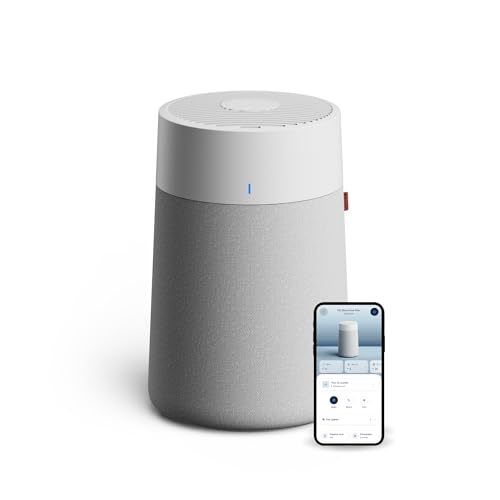
Choosing between Blueair and Dyson ultimately comes down to your primary need. If you want a powerful air purifier that also heats and cools your room year-round, the Dyson Purifier Hot+Cool HP2 De-NOx is an excellent choice. If your main concern is maintaining comfortable humidity without visible mist or white dust, the BLUEAIR 7.6L Mist-Free Humidifiers for Home offers whole-room comfort with smart features. Both brands deliver quality, but your specific needs will guide the best pick.
Related Guides
- Best HEPA Air Scrubber Reviews for 2026
- PuroAir 240 HEPA Air Purifier Review for 2026
- Shark NeverChange Air Purifier Max Review
Frequently Asked Questions
Which is better for allergies, Blueair or Dyson?
Dyson’s fully sealed HEPA H13 filtration captures 99.97% of allergens, making it highly effective for allergy sufferers. Blueair’s humidifiers also help by maintaining optimal humidity levels, which can reduce airborne allergens.
Can I use a Dyson purifier as a heater in winter?
Yes, models like the Dyson Purifier Hot+Cool HP2 De-NOx and HP1 provide even heating for a whole room, making them versatile for year-round use.
How often do I need to replace the filter in a Blueair humidifier?
Blueair’s antimicrobial wick filter lasts about six months. The included Full-Season Care Kit with descaling powder helps maintain performance.
Are Dyson purifiers quiet enough for a bedroom?
Dyson purifiers have multiple fan speeds, including a low setting that is suitable for bedrooms. For the quietest operation, Blueair’s humidifiers at 20 dB are nearly silent.


