🔥 Black Friday Air Purifier Deals of 2026: picks worth watching →
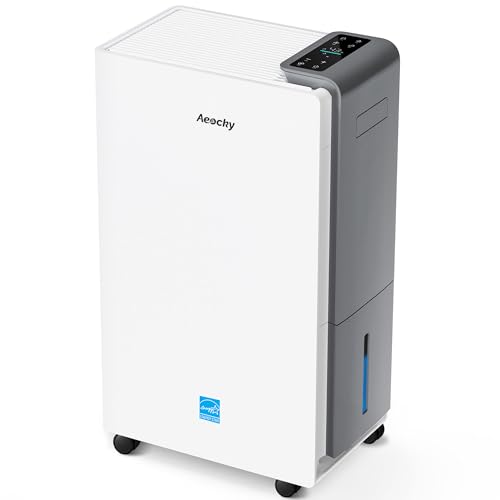
Imagine your basement feels like a damp cave, or your crawl space smells musty after every rain. You need a dehumidifier that can handle the job without breaking the bank or your peace. In this guide, we compare AEOCKY Vega vs DREO H3 models to help you decide which brand fits your space and budget. Both offer Energy Star certified efficiency, but they differ in capacity, smart features, and price. If you are still weighing options, check out our hOmeLabs vs AEOCKY comparison for additional insight.


Buying Guide
Moisture Removal Capacity
How much water a dehumidifier pulls from the air daily matters most for large spaces. AEOCKY models like the LEO-003 can remove up to 140 pints per day, making them ideal for basements up to 8000 square feet. DREO units, such as the 73-pint model, suit rooms up to 2000 square feet. For heavy moisture, AEOCKY leads; for moderate humidity, DREO is sufficient.
Energy Efficiency and Certification
Both brands boast Energy Star certification, but AEOCKY goes further with the “ENERGY STAR Most Efficient 2026” badge, awarded to only 2.6% of models. This means lower electricity bills without sacrificing power. Check the current price on Amazon before you buy. For maximum savings, AEOCKY wins; for budget-friendly efficiency, DREO is solid. See how AEOCKY stacks up against another competitor in our AEOCKY vs waykar.
Noise Levels and Quiet Operation
Noise can disrupt sleep or work. DREO models run as low as 41 dB, which is whisper-quiet. AEOCKY units are also engineered for low vibration and optimized airflow, making them quieter than many pump-equipped competitors. If you need silence in a bedroom or office, DREO has a slight edge; for a basement or garage, AEOCKY is still very acceptable.
Smart Features and App Control
Modern dehumidifiers offer app-based control and monitoring. DREO’s app lets you track energy usage, set schedules, and adjust humidity remotely. AEOCKY models include power-off memory and millisecond-level humidity detection, but lack a dedicated app. For tech-savvy users who want remote control, DREO is the better choice. For reliability and precision, AEOCKY excels. Learn more about dehumidifier benefits in our guide on whether a dehumidifier is worth it.
Final Thoughts
After comparing AEOCKY Vega vs DREO H3, your choice depends on your space and priorities. For large basements or crawl spaces with heavy moisture, the AEOCKY Dehumidifier with Pump Up to 16.5ft Energy offers unmatched capacity with its 140-pint pump and top-tier efficiency. For smaller rooms or homes where quiet operation and app control matter, the DREO Energy Star 2025 Smart Dehumidifier delivers solid performance at a lower cost. Both are excellent picks for 2026.
Related Guides
- Top Dehumidifiers for Attic Spaces in 2026
- Dehumidifiers for Home Which Best Buy in 2026
- Frigidaire Dehumidifier Best Buy Guide for 2026
- Best Dehumidifier for RV Storage: Top Picks for 2026
Frequently Asked Questions
Which dehumidifier is better for a large basement: AEOCKY or DREO?
AEOCKY models, especially the 140-pint LEO-003, are better for large basements up to 8000 square feet. DREO units cap at 75 pints and cover up to 4500 square feet. For expansive spaces, AEOCKY is the clear winner.
Are AEOCKY dehumidifiers Energy Star certified in 2026?
Yes, AEOCKY holds the ENERGY STAR Most Efficient 2026 certification for some models, which is the highest efficiency tier. DREO also offers Energy Star 2026 certified models, but they do not achieve the “Most Efficient” designation.
Do DREO dehumidifiers have a pump for upward drainage?
No, DREO dehumidifiers rely on gravity drainage or a hose for continuous operation, but they do not include a built-in pump. AEOCKY offers pump models that can pump water upward up to 16.5 feet, ideal for basements without floor drains.
Which brand is quieter: AEOCKY or DREO?
DREO models are rated as low as 41 dB, making them very quiet for bedrooms or offices. AEOCKY units are also quiet for their class, but DREO has a slight advantage in noise reduction. For silent operation, DREO is preferred.