🔥 Black Friday Air Purifier Deals of 2026: picks worth watching →
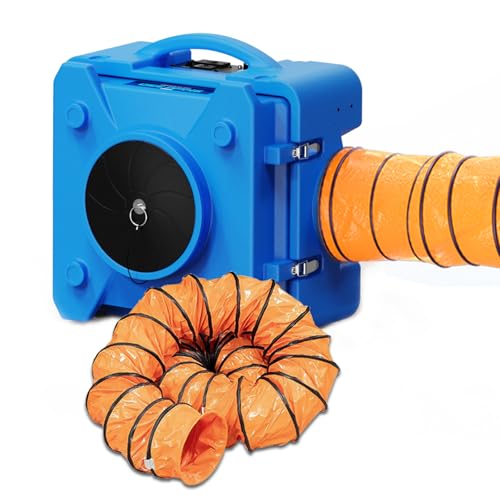
If you are involved in water damage restoration, mold remediation, or simply need a powerful air cleaning solution for a commercial or large residential space, you understand the critical importance of a reliable air scrubber. The market offers many options, but finding a unit that balances high airflow, effective filtration, and practical features can be challenging. In this CADPXS Shield-550 air scrubber review, we will assess the capabilities of the CADPXS Shield-550 Air Scrubber 550 CFM to help you decide if it is the right fit for your specific requirements.
This review focuses on a single product, the CADPXS Shield-550 Air Scrubber 550 CFM, a stackable negative air machine designed for rigorous tasks like airborne particle removal during construction, mold cleanup, and general air quality improvement. We will explore its core features, evaluate its performance based on specifications, and guide you through the key factors to consider before making a purchase. Whether you are a contractor, a restoration professional, or a homeowner tackling a major renovation, this guide aims to provide the insights you need.



Buying Guide
Airflow and CFM Rating
The airflow capacity, measured in cubic feet per minute (CFM), is the most critical specification for an air scrubber. A higher CFM rating means the unit can move more air and filter a larger space more quickly. For commercial applications like water damage restoration or mold remediation, a unit with at least 500 CFM is often recommended to handle the demanding requirements of drying and particle removal. The CADPXS Shield-550 offers 550 CFM, placing it in the mid-to-high range for portable scrubbers, suitable for rooms up to several thousand square feet depending on the air changes per hour needed.
Consider the size of the area you will be treating. For a small construction zone or a single room, a lower CFM might suffice, but for open floor plans or multi-room projects, the 550 CFM rating provides a good balance of power and portability. Always check the manufacturer’s specifications for effective coverage area and air changes per hour (ACH) to ensure the unit meets your project’s demands.
Filtration System Stages
The effectiveness of an air scrubber hinges on its filtration system. Most professional-grade units use a multi-stage approach: a pre-filter for large particles like dust and hair, a HEPA filter for capturing 99.97% of particles as small as 0.3 microns (including mold spores, pollen, and pet dander), and sometimes a carbon filter for odors and VOCs (volatile organic compounds). The CADPXS Shield-550 features a 3-stage filtration system, which typically includes a pre-filter, a HEPA filter, and a carbon filter, making it versatile for both particulate and odor control.
When evaluating filtration, consider the specific contaminants you need to address. For mold remediation, HEPA filtration is essential. For smoke or chemical odors, a thick carbon filter becomes important. The shield-550’s three-stage design offers a comprehensive solution, but always verify the filter types and their specifications (e.g., MERV rating for pre-filters, carbon weight for odor absorption) to ensure they match your application.
Portability and Stackability
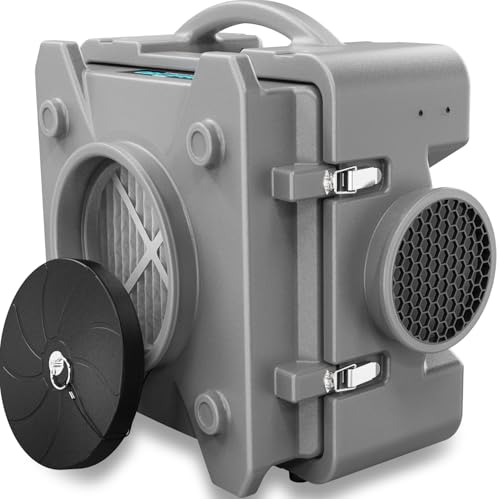
On a job site, ease of movement and storage can significantly impact workflow. A stackable design allows you to save floor space by placing multiple units on top of each other, which is a major advantage during large-scale projects. The CADPXS Shield-550 is explicitly marketed as a stackable negative air machine, meaning you can securely stack several units to increase overall airflow in a confined area without taking up additional floor footprint. Look for units with sturdy handles and wheels for easy transport.
Portability features like built-in handles, durable casters, and a manageable weight (typically under 50-60 pounds for a 500+ CFM unit) are important for moving the scrubber between rooms or loading it into a vehicle. The shield-550’s design appears to prioritize these aspects, making it suitable for professionals who need to deploy equipment quickly and efficiently. If you plan to use the scrubber in multiple locations, prioritize models with robust wheels and ergonomic handles.
Construction and Durability
Air scrubbers used in demanding environments like construction sites or water damage restoration need to withstand rough handling, dust, and moisture. The build quality, including the cabinet material (often heavy-duty plastic or steel), the sealing of the filter compartments, and the reliability of the motor, determines the unit’s lifespan. The CADPXS Shield-550 is built with a robust cabinet intended for commercial use, featuring a design that protects the internal components and filters from damage.
Check for features like a sealed HEPA filter housing to prevent bypass (unfiltered air escaping), a durable power cord with a secure connection, and a motor rated for continuous operation. Units with a reputation for durability often include warranties and have positive feedback from professionals. While we cannot comment on specific long-term reviews due to limited data, the shield-550’s construction appears solid for its price point, but always inspect the unit’s physical build and read user feedback on reliability.
Final Thoughts
In summary, the CADPXS Shield-550 Air Scrubber 550 CFM presents a compelling option for those needing a powerful, stackable air cleaning solution for professional or heavy-duty residential use. Its 550 CFM airflow and three-stage filtration system address a wide range of airborne contaminants, from mold spores to dust and odors, making it a versatile tool for restoration contractors, construction crews, and homeowners tackling major projects. If you prioritize high airflow and a space-saving stackable design, the CADPXS Shield-550 Air Scrubber 550 CFM is worth strong consideration. For those with less demanding needs or smaller spaces, exploring other options in the category might be beneficial, but for serious air quality challenges, this unit is a capable and practical choice.
Related Guides
Frequently Asked Questions
What is the difference between an air scrubber and an air purifier?
An air scrubber is typically a more powerful, industrial-grade unit designed for high CFM airflow and often used in restoration or construction to remove large amounts of particles. Air purifiers are generally smaller, quieter, and intended for continuous use in a single room to improve overall air quality. The CADPXS Shield-550 falls into the air scrubber category due to its high CFM and stackable design.
How often should I replace the filters on the Shield-550?
Filter replacement frequency depends on usage and the environment. In heavy-duty applications like mold remediation or construction, the pre-filter may need changing every few weeks, while the HEPA filter can last several months. The carbon filter’s lifespan varies based on odor levels. Always monitor the unit’s performance and check the filters for visible dirt or damage. Refer to the manufacturer’s guidelines for specific intervals.
Can the CADPXS Shield-550 be used for mold removal?
Yes, the Shield-550 is suitable for mold remediation due to its 550 CFM airflow and HEPA filtration, which captures mold spores effectively. It is designed to create negative air pressure in a containment area, preventing spores from spreading to other parts of the building. For best results, pair it with proper containment protocols and moisture control measures.
Is the Shield-550 quiet enough for residential use?
At 550 CFM, the Shield-550 will produce noticeable noise, typical of high-performance air scrubbers. It is not designed for silent operation in a bedroom but is appropriate for basements, garages, or during renovation projects where noise is less of a concern. If low noise is a priority, consider smaller, quieter air purifiers for continuous use, but for powerful air cleaning, some noise is expected.